Choosing the wrong MPO connector type is one of the most expensive mistakes in data center cabling. Not because the connector itself costs much — but because rebuilding a high-density structured cabling system after the fact does.
I’ve helped network engineers and procurement teams source MPO cabling for 10G through 800G environments. The MPO-12 vs MPO-16 vs MPO-24 decision comes up on almost every project. This guide gives you a clear framework to make the right call for your specific deployment.
TL;DR — Quick Answer
| Choose | If You Are… |
|---|---|
| MPO-12 | Running 40G-SR4, 100G-SR4, or 100G-PSM4; extending existing MPO-12 infrastructure; need widest cassette/panel ecosystem |
| MPO-16 | Deploying 400G-SR4.2 or 800G-SR8 (QSFP-DD / OSFP); building new AI cluster cabling from scratch in 2025–2026 |
| MPO-24 | Running 100G-SR10 or high-count backbone trunking; pulling inter-building runs where fewer cables = lower cost |
Head-to-Head Comparison
| Feature | MPO-12 | MPO-16 | MPO-24 |
|---|---|---|---|
| Fibers per connector | 12 | 16 | 24 |
| Connector body width | Standard | Standard (same as MPO-12) | Wider body |
| Insertion loss (standard PC) | ≤ 0.35 dB per mated pair | ≤ 0.35 dB per mated pair | ≤ 0.35 dB per mated pair |
| Low-loss grade | ≤ 0.20 dB | ≤ 0.20 dB | ≤ 0.20 dB |
| 40G use case | 40G-SR4 ✓ | — | — |
| 100G use case | 100G-SR4, 100G-PSM4 ✓ | 100G (2×50G per pair) | 100G-SR10 ✓ |
| 400G use case | 400G via 2×MPO-12 | 400G-SR4.2, 400G-DR4 ✓ | 400G (structured) |
| 800G use case | 800G via 2×MPO-12 | 800G-SR8 ✓ | 800G (structured) |
| Cassette ecosystem | ⭐⭐⭐⭐⭐ (widest) | ⭐⭐⭐ (growing) | ⭐⭐⭐⭐ |
| Relative cost per unit | Lowest | Moderate | Higher |
| IEEE standard | 802.3ba / 802.3bm | 802.3bs | 802.3ba (100G-SR10) |
MPO-12 — The Universal Standard
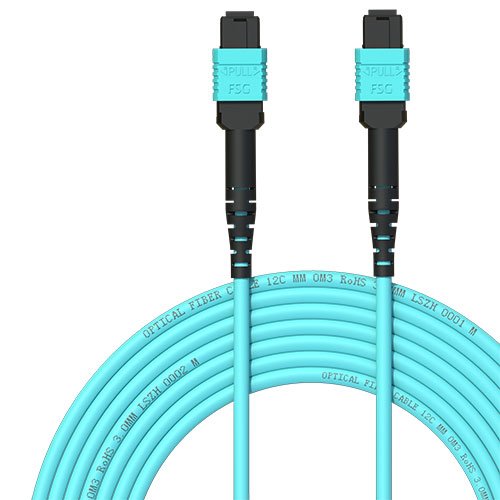
MPO-12 is the dominant connector type in installed data center infrastructure worldwide. The 12-fiber body has been the standard since the earliest MPO deployments. The ecosystem is enormous: every major vendor of MPO trunk cables, cassettes, patch panels, and test equipment supports MPO-12 as a first priority.
Bandwidth Reference: MPO-12 Applications
| Application | Standard | Fibers Used | OM4 Distance |
|---|---|---|---|
| 40G-SR4 | IEEE 802.3ba | 8 active (4 Tx + 4 Rx) | 150 m |
| 100G-SR4 | IEEE 802.3bm | 8 active (4 Tx + 4 Rx) | 100 m |
| 100G-PSM4 | 100G-PSM4 MSA | 8 active (OS2 single-mode) | 500 m (OS2) |
| 400G-SR8 (dual MPO) | IEEE 802.3cm | 16 active across 2×MPO-12 | 100 m (OM4) |
MPO-16 — Purpose-Built for 400G/800G
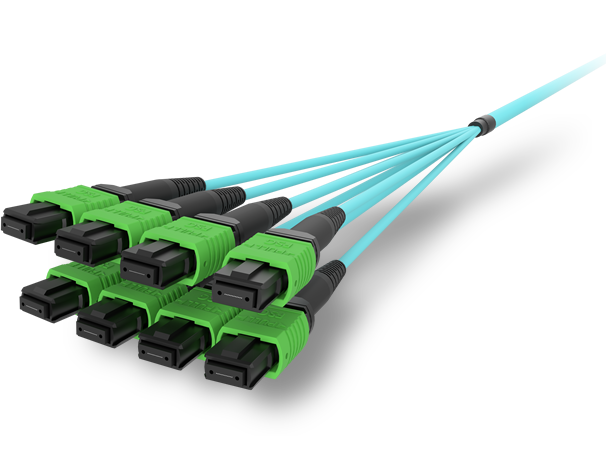
MPO-16 was standardized to solve a specific problem: 400G and 800G SR transceivers need 16 active fibers (8 Tx + 8 Rx), and cramming that into two MPO-12 connectors wastes a connector and adds management overhead. MPO-16 puts all 16 fibers in a single connector body — same exterior dimensions as MPO-12.
Bandwidth Reference: MPO-16 Applications
| Application | Standard | Fibers Used | OM4 Distance |
|---|---|---|---|
| 400G-SR4.2 | IEEE 802.3cm | 16 active (all) | 100 m |
| 400G-DR4 | IEEE 802.3bs | 16 active (OS2) | 500 m (OS2) |
| 800G-SR8 | IEEE 802.3df | 16 active (all) | 50 m (OM4) |
💬 Planning 400G or 800G infrastructure? Chat with Candy on WhatsApp for a sourcing recommendation within 24 hours.
MPO-24 — Maximum Fiber Density per Connection
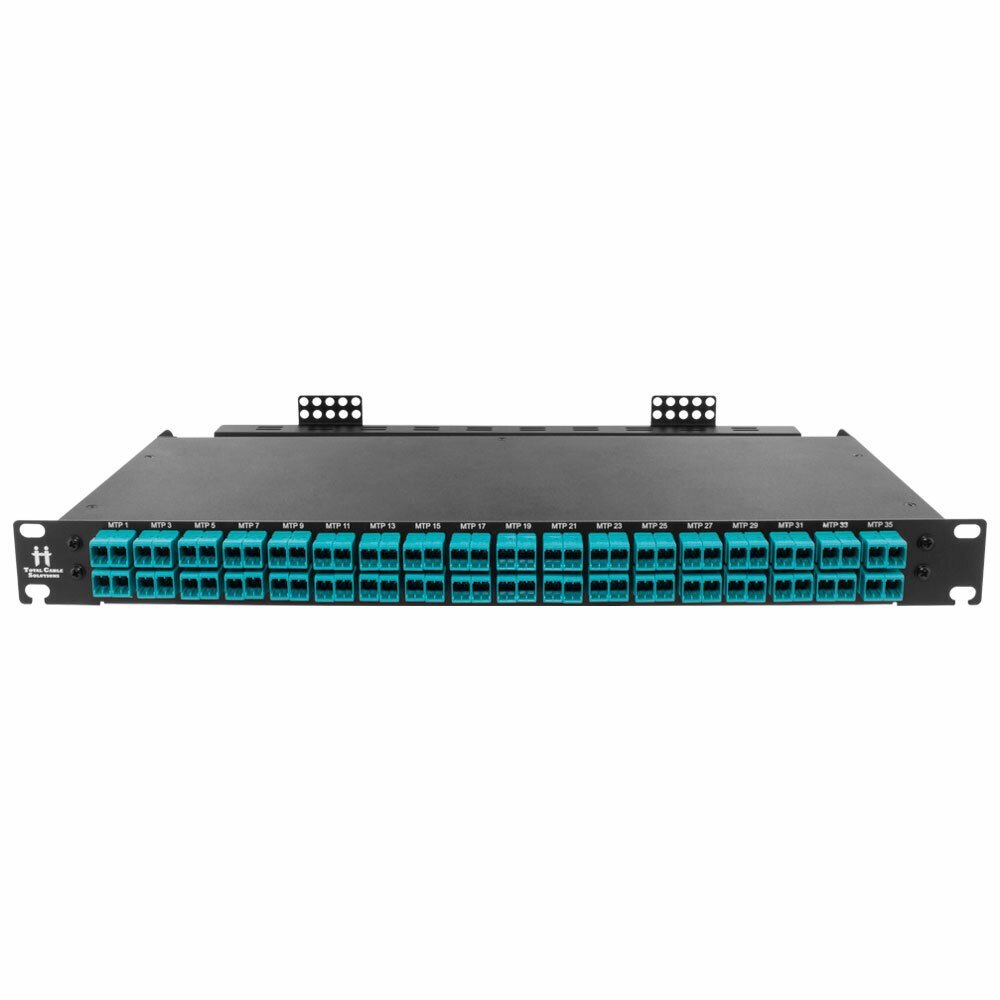
MPO-24 uses a physically wider connector body to fit 24 fiber positions. It doesn’t fit in MPO-12/16 adapters — MPO-24 has its own adapter and panel format. Where it wins: campus and inter-building backbone, 100G-SR10 infrastructure, and high-fiber-count structured backbones.
Bandwidth Reference: MPO-24 Applications
| Application | Standard | Fibers Used | Notes |
|---|---|---|---|
| 100G-SR10 | IEEE 802.3ba | 20 active | Legacy 100G in CFP form factor |
| Backbone trunking | TIA-942 structured | 24 (all) | Highest fiber count per connector pair |
| Campus inter-building | TIA-568 | 24 (all) | Fewer cable pulls vs MPO-12 |
OM3, OM4, or OM5 — Fiber Type to Pair with Each
| Fiber Type | Bandwidth Grade | Max Distance (100G-SR4) | Best Pairing |
|---|---|---|---|
| OM3 | 2,000 MHz·km | 70 m | Legacy 40G/100G installs |
| OM4 | 4,700 MHz·km | 100 m | Current 100G–400G SR deployments |
| OM5 | 4,700 MHz·km + SWDM4 | 150 m (100G-SWDM4) | 400G-SWDM4, future-proofed builds |
For new 400G builds: OM4 with MPO-16 is the most common and best-value combination in 2026. OM5 adds cost without a clear advantage unless you’re specifically using SWDM4 transceivers.
Common Mistakes to Avoid
| Mistake | What Goes Wrong | Fix |
|---|---|---|
| Mixing MPO-12 and MPO-16 adapters | Nothing mates — physically incompatible | Confirm connector type matches throughout the channel |
| Specifying MPO-12 for new 400G deployments | Need two MPO-12s per 400G-SR8 transceiver | Use MPO-16 for 400G/800G new builds |
| Not specifying polarity type | Dead links after installation | Specify Type A, B, or C — see our MPO polarity guide |
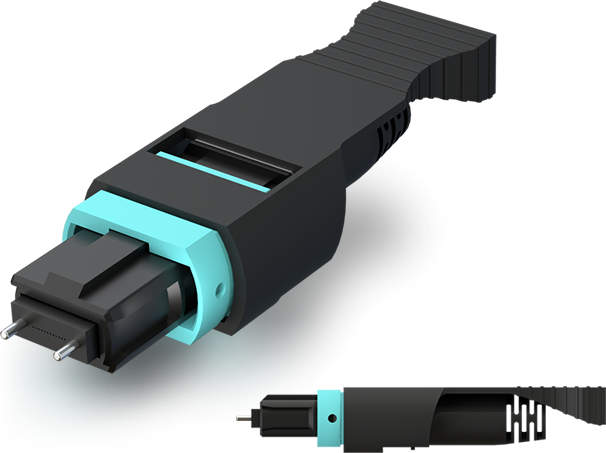
| Ignoring connector gender | Both ends are same gender — won’t mate | In direct cables: one male (with pins), one female; in cassette systems: cassette determines gender |
FAQs
Are MPO-12, MPO-16, and MPO-24 physically intermateable?
No. Each uses a different fiber position layout. MPO-12 and MPO-16 share the same body width but different fiber positions — they will physically engage but signal won’t pass. MPO-24 has a wider body and won’t physically mate with MPO-12/16 adapters.
Can I use MPO-12 cables for 400G-SR8 transceivers?
Yes, but you need two MPO-12 cables per transceiver — a “dual-MPO” configuration. It works but adds connector count and management complexity.
Which MPO type for 800G deployments?
Current 800G-SR8 transceivers (QSFP-DD800 and OSFP) use MPO-16 interfaces — same as 400G-SR4.2. MPO-16 infrastructure built for 400G is directly reusable at 800G.
What does “key up / key down” mean?
The MPO connector has a key tab that determines orientation when mated. “Key up” = tab faces upward; “key down” = tab faces downward. This orientation directly affects polarity. See our full polarity guide for details.
Ready to spec your MPO cabling?
- 📋 Request a custom quote →
- 💬 Chat with Candy on WhatsApp →
- 🔗 MTP/MPO Trunk Cables →
- 🔗 MTP/MPO Breakout Cables →
- ⏱️ Response within 24 hours | Custom lengths and fiber types available
Talk to ABPTEL
Looking for the right optical hardware for your AI data center, GPU cluster, or FTTA project? ABPTEL ships from Shenzhen with OEM/ODM support, fast lead times, and engineering-level pre-sales advice.
- 🔥 400G & 800G OSFP / QSFP-DD Transceivers — for AI training fabrics and hyperscale spine-leaf
- 📡 MPO / MTP High-Density Cabling — 12 / 24 / 32-fiber for high-density data centers
- ⚡ AOC & DAC Cables — short-reach GPU interconnects, OEM compatible
- 🧩 SFP / SFP+ / SFP28 / QSFP28 Modules — 1G to 100G optical transceivers
- 📋 Data Center Cabling Solutions — end-to-end design guide
- ❓ Read our FAQ — compatibility, polarity, lead time, MOQ
💬 Get a quote in 12 hours: Contact Candy · WhatsApp +86 188 1445 5697 · candy@abptel.com