If you’re planning a high-density fiber deployment — a hyperscale data center backbone, a 5G fronthaul ring, or a dense metro access network — you’ve probably come across the term “rollable ribbon fiber” or “spider web ribbon fiber.” It sounds like marketing. It isn’t.
Rollable ribbon fiber is a genuine engineering breakthrough that lets you pack 10× more fiber into the same cable diameter compared to traditional loose-tube designs. I’ve been sourcing fiber optic cables for data center and telecom infrastructure projects for years, and the shift toward ribbon-core high-density cables is one of the most significant changes I’ve seen in the past decade.
This guide covers everything you need to make a smart sourcing decision: what rollable ribbon fiber actually is, how it differs from flat ribbon and loose-tube, which specs matter, and where it makes sense to use it.
What Is Rollable Ribbon Fiber?
Traditional ribbon fiber bonds fibers together continuously along their entire length using a UV-cured acrylate matrix. This creates a flat, rigid strip — easy to mass-splice, but stiff and bulky.
Rollable ribbon fiber (also called spider web ribbon, intermittently bonded ribbon, or IB-ribbon) uses a different bonding pattern: the fibers are bonded only at intervals, leaving sections unbound between them. The result looks like a web of connections rather than a solid strip — hence the “spider web” name.
Because the bonding is intermittent, the ribbon can be coiled into a round cross-section, separated fiber by fiber for individual connectorization, and mass-spliced like conventional ribbon when needed.
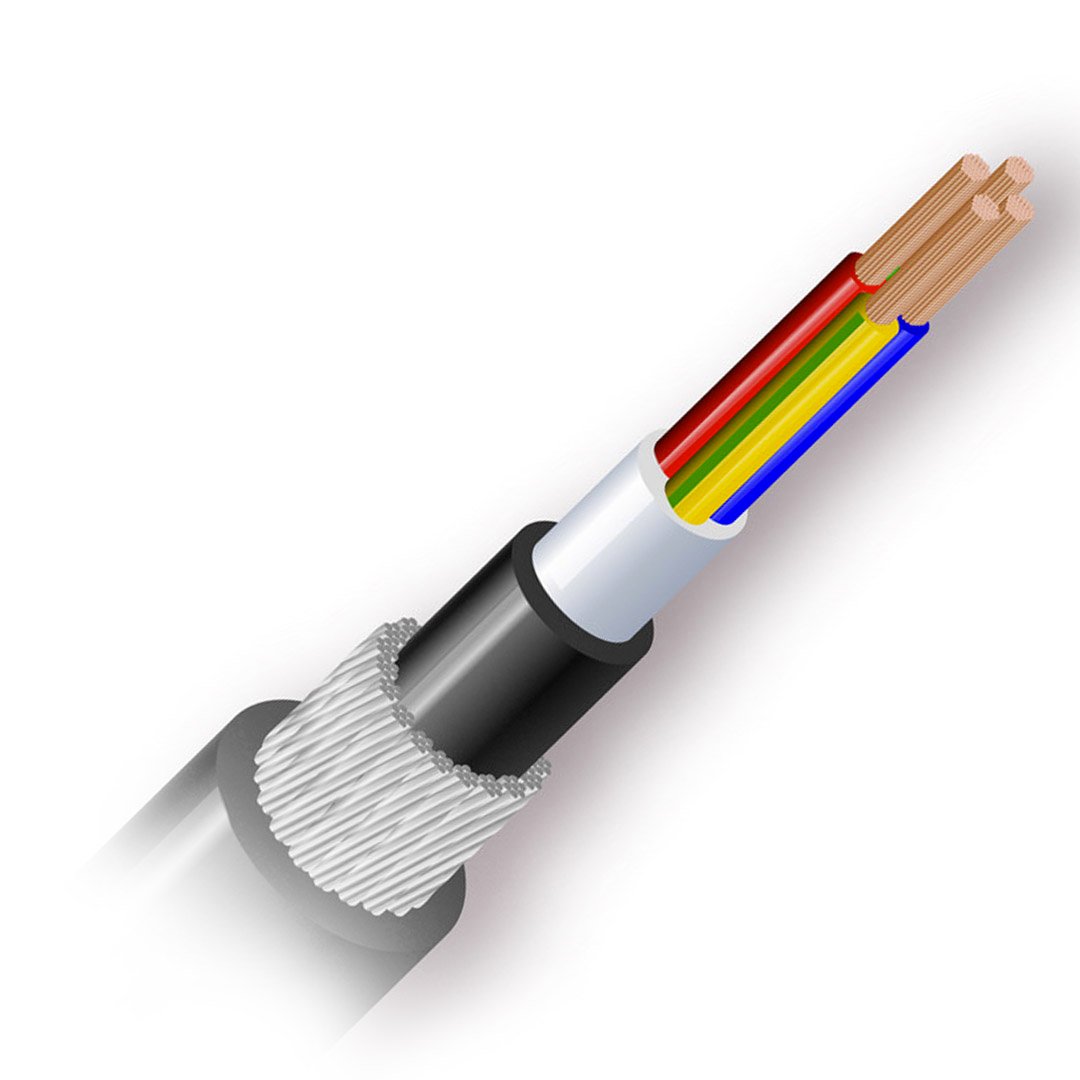
This one structural change unlocks dramatically higher fiber counts in standard cable outer diameters. A 288-fiber loose-tube cable might be 20–22 mm in diameter. A 288-fiber rollable ribbon cable achieves the same fiber count at 16–17 mm — with room for even more if you go to 864F or 1728F.
Rollable vs. Flat Ribbon vs. Loose-Tube: Key Differences
| Feature | Loose-Tube | Flat Ribbon | Rollable Ribbon |
|---|---|---|---|
| Fiber count range | 2F–288F typical | 12F–864F | 144F–3,456F+ |
| Cable OD (288F) | ~20–22 mm | ~18–20 mm | ~16–17 mm |
| Mass splicing | No | Yes (12F at once) | Yes (12F at once) |
| Individual fiber access | Easy | Requires ribbon separation | Easy — fibers separate naturally |
| Bend flexibility | High | Low–Medium | High |
| Deployment speed | Slow | Fast | Fastest |
| Best use case | General OSP, short runs | High-count backbone | Ultra-high-density backbone |
Key Specifications to Evaluate
Fiber Count
| Fiber Count | Typical Application | Lead Time |
|---|---|---|
| 144F | Enterprise backbone, edge DC interconnects | Stock / 1–2 weeks |
| 288F | Metro and regional telecom networks | 1–3 weeks |
| 432F / 576F | Regional aggregation | 2–4 weeks |
| 864F / 1,728F | Hyperscale DC interconnects, long-haul backbone | 4–8 weeks |
| 3,456F+ | Submarine-adjacent terrestrial, national backbone | 8–12 weeks custom |
Fiber Type Selection
| Fiber Type | Standard | Attenuation (1550 nm) | Best For |
|---|---|---|---|
| G.652D | Standard SMF | ≤ 0.20 dB/km | Metro and regional |
| G.654E | Ultra-low-loss | ≤ 0.17 dB/km | Long-haul, extended reach |
| G.657A1/A2 | Bend-insensitive | ≤ 0.20 dB/km | Tight-space DC deployments |
| OM4 (multimode) | IEC 60793-2-10 | ≤ 3.0 dB/km (850 nm) | Short-reach data center links |
Applications: Where Rollable Ribbon Makes Sense
1. Hyperscale Data Center Backbone
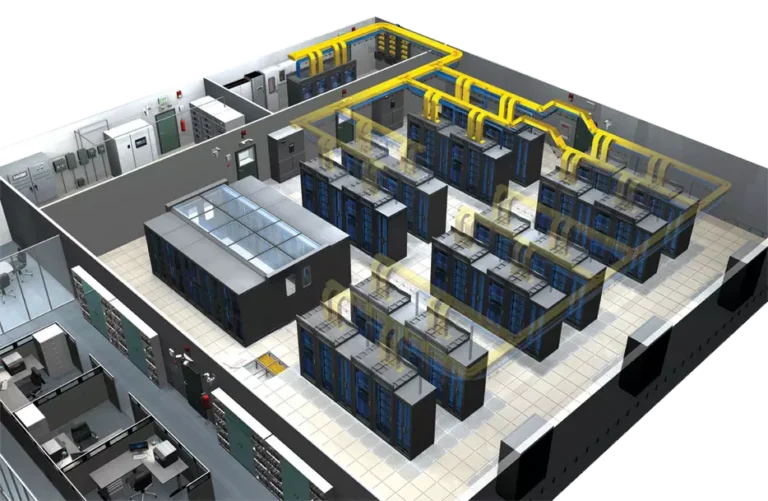
When you’re running thousands of fibers between spine and leaf layers, or between two DC buildings on campus, rollable ribbon gives you fewer cable pulls, faster splicing, and less conduit fill. I’ve seen campus DC interconnects where switching from loose-tube to rollable ribbon cut conduit fill from 85% to under 40% — saving a six-figure civil works bill.
2. 5G Fronthaul Dense Deployments
5G small cell deployments in urban areas require high fiber counts in very small duct diameters. Rollable ribbon cables at 144F–288F fit comfortably in 25 mm microducts that would choke on equivalent loose-tube designs.
3. High-Density MPO Trunk Infrastructure
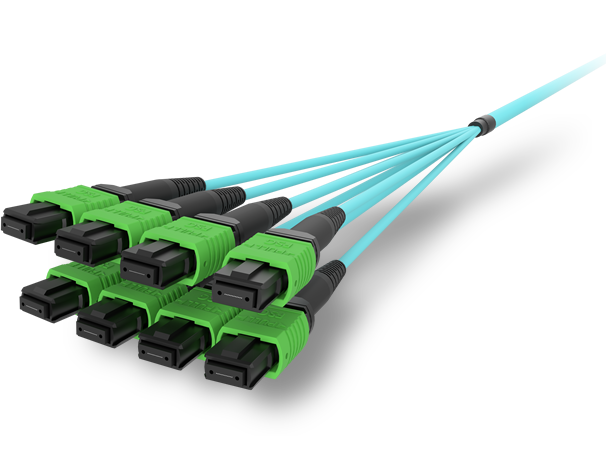
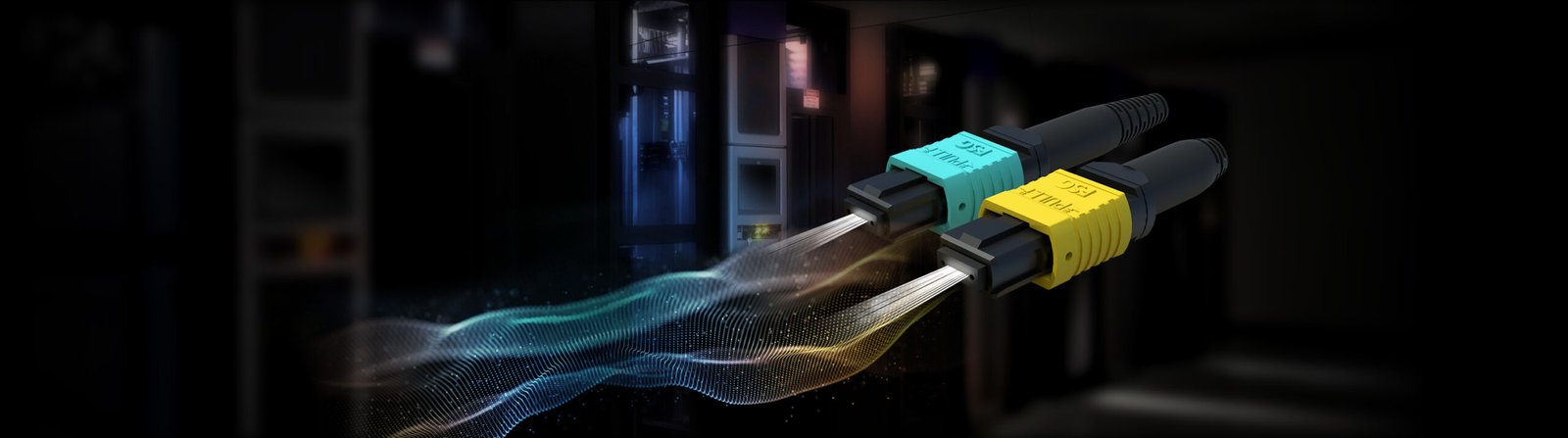
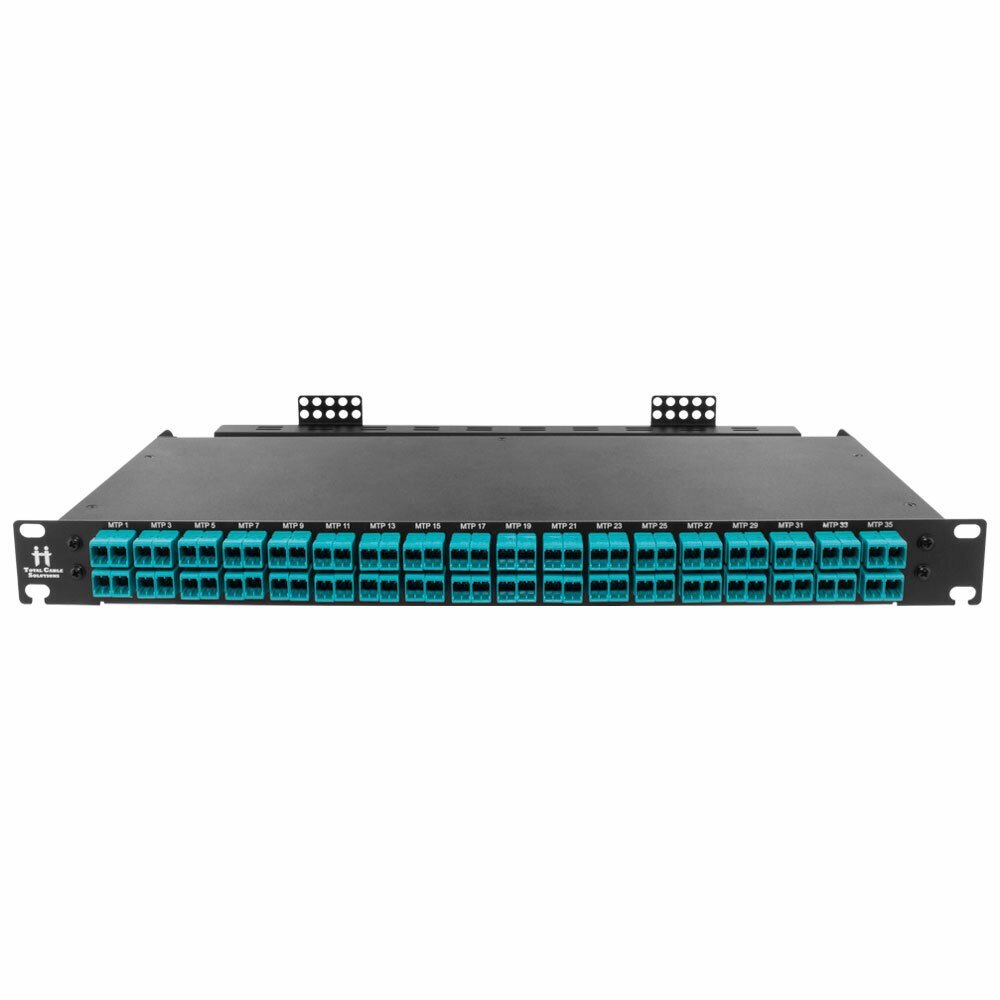
For data centers using high-count MPO trunk cables (72F, 96F, 144F), the fiber inside those trunks is often ribbon-based — it’s what enables the factory-terminated, precision-aligned MPO connectors at both ends.
Mass Fusion Splicing: The Speed Advantage
With loose-tube cable, every fiber is spliced individually. With a 12-fiber mass fusion splicer, you splice all 12 fibers in one cycle — so 288F takes 24 cycles instead of 288. That’s a 12× speed improvement per joint.
| Activity | 288F Loose-Tube | 288F Rollable Ribbon |
|---|---|---|
| Preparation and fiber exposure | ~45 min | ~45 min |
| Splicing | ~8–10 hours (288 individual) | ~2 hours (24 × 12F mass) |
| Closure and restoration | ~45 min | ~30 min |
| Total per joint | ~10–12 hours | ~3.5 hours |
How to Source Rollable Ribbon Fiber Cable
RFQ Specification Checklist
| Item | What to Specify |
|---|---|
| Fiber count | Total and per ribbon unit (e.g. 288F, 12F per ribbon = 24 ribbons) |
| Fiber type | G.652D / G.654E / OM4 / G.657A1 etc. |
| Cable construction | Sheath type (LSZH/PE/HDPE), armoring, strength member (GRP or steel) |
| Drum length | Standard 4 km or 6 km, or custom; number of drums |
| Standards | IEC 60794-1, ITU-T G.652/G.654, RoHS, CE |
| Documentation | Per-drum OTDR trace, fiber type certificate, RoHS declaration |
| Delivery | Port of loading, Incoterms, target delivery week |
💬 Need a quote for high-density rollable ribbon cable or MPO trunk solutions? Chat with Candy on WhatsApp — typical response within 24 hours.
Common Mistakes Buyers Make
| Mistake | Consequence | How to Avoid |
|---|---|---|
| Specifying fiber count without ribbon count | Wrong splicer tooling ordered | Specify both total fiber count and fibers per ribbon unit |
| Ignoring sheath/duct compatibility | High friction on long haul pulls | Ask for friction coefficient spec; match to duct material |
| Ordering exact drum lengths without slack | Short cable, project delay | Add 3–5% to measured route length |
| Assuming all splicers are compatible | Splicer can’t hold the ribbon flat | Test with sample length before full order |
| Saying “ribbon fiber” without specifying rollable | Supplier quotes flat ribbon instead | State explicitly: intermittently bonded / rollable / spider web ribbon construction |
FAQs
What is the difference between spider web ribbon fiber and standard ribbon fiber?
Standard ribbon bonds fibers continuously — flat and rigid. Spider web (rollable) ribbon bonds only at intervals, making it flexible enough to coil. This enables much higher fiber counts in standard cable diameters and easier individual fiber access.
Can rollable ribbon be mass-spliced like standard ribbon?
Yes. Despite the intermittent bonding, rollable ribbon can be held flat during mass fusion splicing. Most modern 12-fiber mass fusion splicers handle rollable ribbon — but verify your specific splicer model first.
What fiber counts are available?
Common options: 144F, 288F, 432F, 864F, 1728F. Counts above 1728F are typically custom orders with 8–12 week lead times.
Is rollable ribbon more expensive than loose-tube?
The cable itself costs more per fiber per kilometer. But total installed cost is usually lower — mass splicing reduces labor significantly. On a 288F route with 10 splice points, labor savings typically offset the cable premium 2–3×.
What standards apply?
Key references: IEC 60794-1 (cable), ITU-T G.652/G.654 (fiber), IEC 60304 / TIA-598 (color coding), IEC 61300-3-4 (insertion loss for connectorized versions).
Planning a high-density fiber or MPO infrastructure project?
- 📋 Request a custom quote →
- 💬 Chat with Candy on WhatsApp →
- 🔗 Browse MPO/MTP Trunk Cables →
- ⏱️ Response within 24 hours | Custom specs welcome
Talk to ABPTEL
Looking for the right optical hardware for your AI data center, GPU cluster, or FTTA project? ABPTEL ships from Shenzhen with OEM/ODM support, fast lead times, and engineering-level pre-sales advice.
- 🔥 400G & 800G OSFP / QSFP-DD Transceivers — for AI training fabrics and hyperscale spine-leaf
- 📡 MPO / MTP High-Density Cabling — 12 / 24 / 32-fiber for high-density data centers
- ⚡ AOC & DAC Cables — short-reach GPU interconnects, OEM compatible
- 🧩 SFP / SFP+ / SFP28 / QSFP28 Modules — 1G to 100G optical transceivers
- 📋 Data Center Cabling Solutions — end-to-end design guide
- ❓ Read our FAQ — compatibility, polarity, lead time, MOQ
💬 Get a quote in 12 hours: Contact Candy · WhatsApp +86 188 1445 5697 · candy@abptel.com