High-speed optical networks power mission-critical services for enterprises, cloud providers, and telecom operators. However, maintaining uninterrupted connectivity becomes increasingly challenging as modern 100G+ links push the boundaries of physical infrastructure, optical modulation, and operational standards. Failures in these systems can ripple through industries, disrupting financial transactions, AI workloads, and global communication. This article explores the multifaceted causes of these disruptions—from physical cuts and optical limitations to component failures, control-plane pitfalls, and even geopolitical risks. Each chapter provides actionable insights into specific failure domains, empowering decision-makers and engineers to enhance resiliency and ensure continued performance in these high-demand infrastructures.
Where Optical Links Physically Break: Infrastructure Weak Points and Environmental Triggers in High-Speed Networks
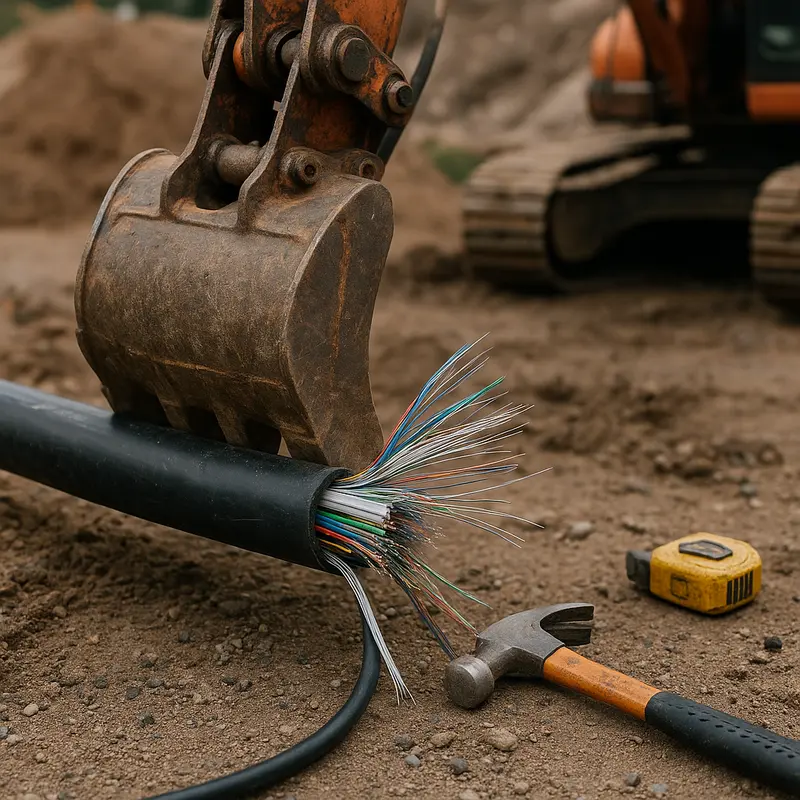
High-speed optical networks often fail for reasons that are brutally simple: the fiber is cut, stressed, contaminated, or exposed to conditions it was never meant to tolerate. Before signal quality collapses because of modulation limits or OSNR erosion, the physical path itself is usually where trouble begins. A backhoe strike can sever a terrestrial route in seconds. Dense metro corridors are especially vulnerable because roadwork, trenching, and utility maintenance place fiber in constant proximity to excavation. Aerial plant faces a different threat profile. Wind, ice loading, pole movement, and animal damage can introduce intermittent faults that are harder to isolate than a clean break.
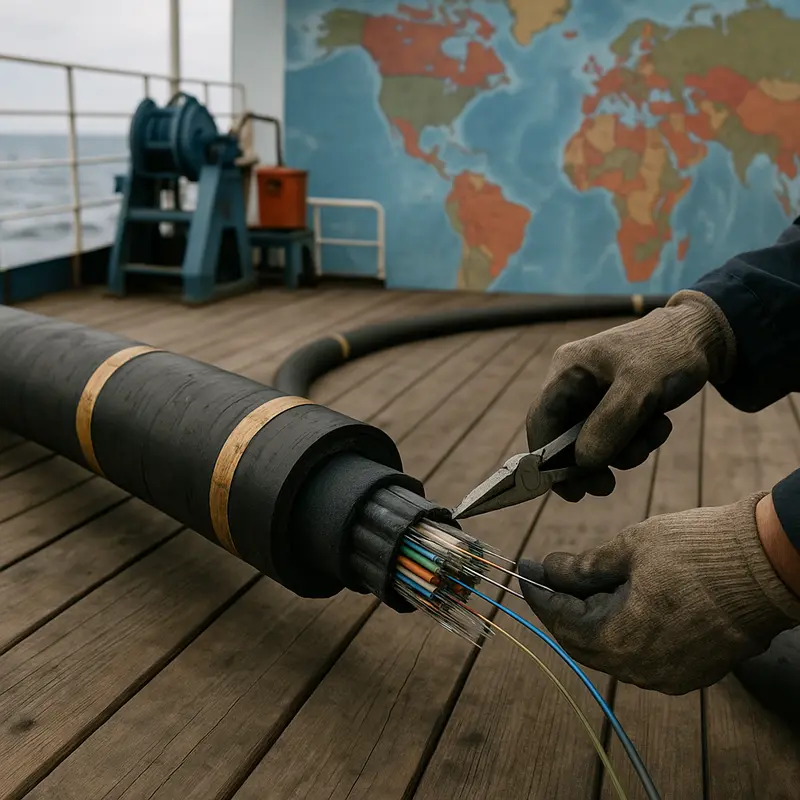
The same pattern holds in long-haul and subsea systems, but the consequences are more severe. Undersea cables face anchors, fishing gear, earthquakes, and landslides. A single fault can remove major international capacity, and repair windows are often measured in weeks. That long recovery time turns physical fragility into a strategic risk. Route diversity helps, but only when supposedly separate paths do not converge at the same landing site, conduit, or regional choke point.
Even when the cable remains intact, mechanical stress can quietly consume link margin. Tight bends in patching fields, poor slack management, and pressure from cable ties create macrobending and microbending loss. These defects rarely look dramatic, yet a few extra decibels can be enough to push a high-speed channel into failure. This is especially true where margins are already thin from long distances or dense wavelength loading. Outdoor deployments add temperature swings, moisture ingress, and jacket contraction, all of which can turn a marginal span into a recurring outage.
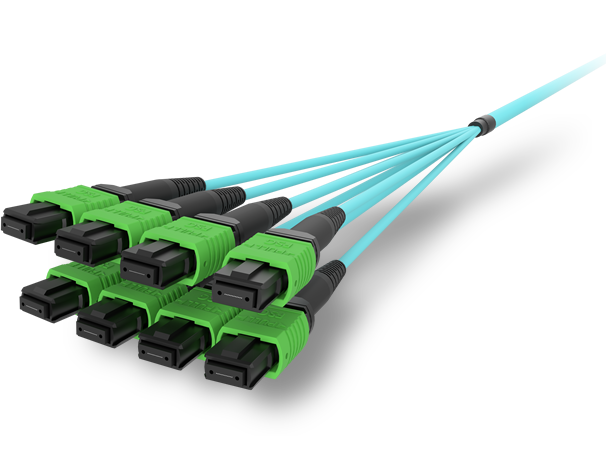
Connectors and splices are equally important because they concentrate risk at small physical interfaces. Dirty endfaces, chipped ferrules, partial seating, and worn patch cords can add insertion loss and reflectance at the worst possible point in the path. In high-density environments, a single contaminated MPO connection can disrupt several lanes at once. Poor optical hygiene remains one of the most preventable causes of failure, which is why strict inspection and cleaning practices matter. Guidance for harsher field conditions is especially relevant in outdoor waterproof ruggedized fiber optic connector applications.
Physical infrastructure also fails through human process, not just weather or accidents. Mispatched panels, incorrect polarity, undocumented reroutes, and closures reopened without proper strain relief can all create faults that appear random until a full plant audit is done. These issues form the foundation for many outages, and they set the stage for the next layer of failure: optical impairments that emerge once the physical path is no longer clean, stable, and within design tolerance.
When Optical Margins Collapse: Impairments and Modulation Limits That Cause Link Failures in High-Speed Networks
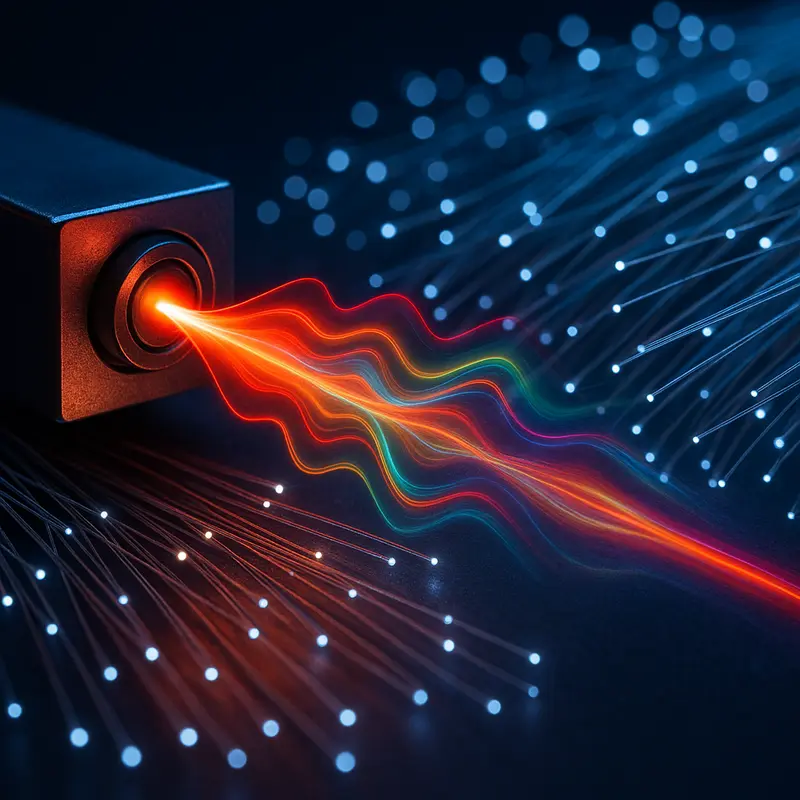
Between obvious physical damage and outright equipment faults lies a harder class of failure: the link remains intact, but the optical signal degrades until recovery is no longer possible. This is where many high-speed networks become fragile. At 100G, 400G, and 800G, failures often begin not with a break, but with shrinking margin. The receiver still sees light, yet the signal arrives too noisy, too distorted, or too spectrally constrained for forward error correction to save it.
The central issue is signal quality under tight modulation limits. Higher-order formats carry more bits per symbol, but they also demand cleaner transmission. A channel using a more efficient constellation gains capacity at the cost of tolerance. Small reductions in optical signal-to-noise ratio can therefore trigger a steep rise in pre-FEC errors. What looked stable yesterday may fail after amplifier aging, a new ROADM hop, or a minor span loss increase. This is one reason migration from 100G to 400G changes failure behavior so noticeably: the network becomes less forgiving of conditions that older links could absorb.
Noise is only part of the story. Chromatic dispersion, polarization effects, and nonlinear distortion interact in ways that are easy to underestimate. Coherent DSP can compensate large dispersion, but compensation is not infinite and not penalty-free. Rapid PMD variation, high differential group delay, or polarization-dependent loss can still reduce effective SNR. At the same time, raising launch power to overcome noise can backfire. Kerr nonlinearities such as self-phase modulation and cross-phase modulation distort the waveform, while four-wave mixing and Raman interactions reshape channel power across the band. The result is a narrow operating window where neither underpowering nor overpowering the span is safe.
Modern reconfigurable optical paths add another constraint: filtering accumulation. Each ROADM stage can slightly narrow passbands, tilt spectra, and introduce ripple or group delay variation. One node may not matter. Ten or fifteen can. High-baud channels are especially vulnerable because they already occupy more of the available spectral slot. If laser frequency drifts, grid alignment is imperfect, or channel spacing is too aggressive, the signal can be clipped just enough to distort the constellation and push BER beyond the FEC threshold.
These failures are often gradual, then sudden. Operators may first see falling Q, rising pre-FEC BER, or intermittent errors during temperature changes and channel adds. Once the residual margin disappears, the link drops or flaps even though no cable was cut and no card has technically failed. In high-speed optical networks, that is what makes impairments so dangerous: they turn ordinary variation into service-affecting failure.
When Hardware Drifts or Dies: Component and System Failures Behind High-Speed Optical Link Outages
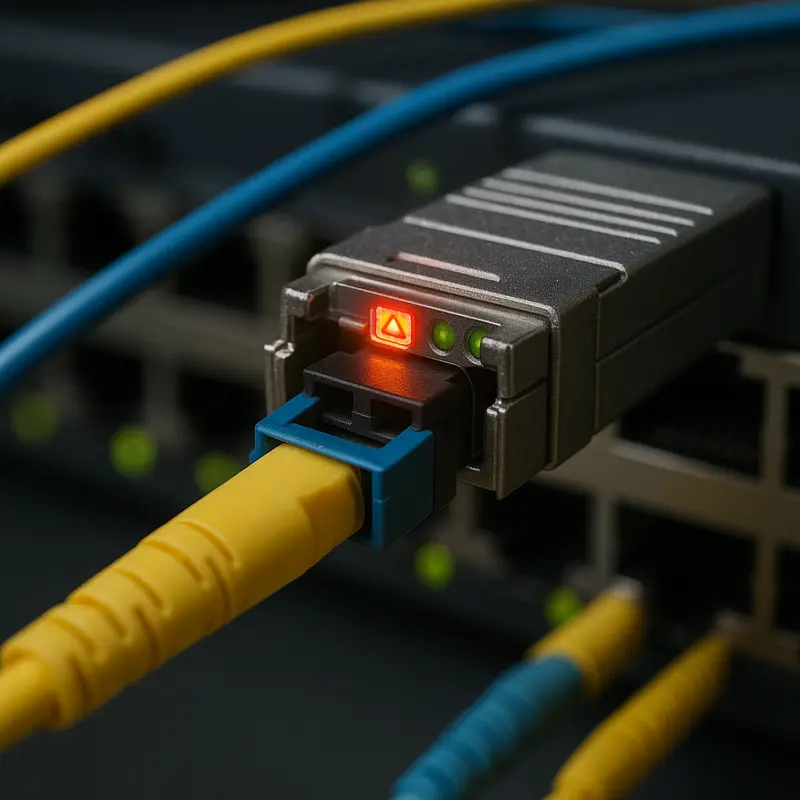
After impairments accumulate along the optical path, failures often become decisive inside the equipment itself. High-speed optical networks depend on tightly coordinated lasers, modulators, amplifiers, switches, clocks, and thermal controls. When any of these elements drifts outside tolerance, the link may not fail gracefully. It can move from healthy margin to uncorrectable errors very quickly.
The most visible problems often begin in transponders and coherent pluggables. A tunable laser can age, lose lock, or shift frequency under thermal stress. A modulator can develop bias drift that distorts the transmitted signal. High-speed converters may clip during unexpected power excursions, while clock recovery circuits can lose stability. These faults usually appear first as rising pre-FEC error rates, intermittent flaps, or sudden loss of signal. In dense 400G and 800G environments, where symbol rates are high and tolerance is tight, even minor hardware drift can push performance beyond recovery. That is one reason operators planning upgrades often focus heavily on module behavior and platform fit, especially in guides such as 400G transceiver procurement considerations.
Amplification systems create another major class of failures. Pump laser aging in optical amplifiers reduces gain and raises noise, quietly eroding margin over time. A complete pump failure can collapse an entire span. Controller faults can be just as damaging. A faulty variable attenuator may overdrive one set of channels while starving another. Gain equalization errors can distort channel balance across a route, causing some wavelengths to fail long before others. In reconfigurable optical nodes, wavelength-selective switching elements can also drift or stall. The result may look like random service degradation, but the underlying issue is often a misrouted, partially blocked, or heavily attenuated channel.
Power and cooling faults bridge the gap between equipment issues and site-wide outages. Brownouts, failing rectifiers, degraded batteries, or overloaded cooling systems can force optical hardware into shutdown or unstable operation. Temperature control failures are especially dangerous because they affect several subsystems at once. Laser frequency can shift, filter alignment can worsen, and digital components can throttle or reset.
Some failures are harder to isolate because the network is misled by its own telemetry. Defective optical power monitors, bad OSNR estimates, or inaccurate digital diagnostics can trigger wrong control actions. A system may raise launch power to compensate for a sensor error, only to create additional penalties. Aging solder joints, weakened pigtails, and intermittent internal connections add another layer of uncertainty, often worsening with vibration or temperature cycling. In high-speed optical networks, component-level faults rarely stay local. They cascade through power balance, signal integrity, and restoration behavior, turning small hardware defects into full link failures.
When Software, Provisioning, and Process Mistakes Become Optical Link Failures

After hardware faults, many of the most disruptive answers to what causes link failures in high-speed optical networks come from the layers meant to coordinate and protect them. A modern optical path is not just fiber and light. It is also a chain of software policies, provisioning databases, controller logic, and field procedures. When any of those drift from reality, the network can fail even though the physical path still exists.
Misconfiguration is often the fastest route from healthy margin to service loss. A channel can be assigned the wrong wavelength, the wrong power target, or an incompatible modulation profile for the route it must cross. In high-speed systems, a few dB too much launch power can push the span into nonlinear penalties. Too little power can starve OSNR and raise pre-FEC errors. In dense data center fabrics, polarity mistakes and incorrect lane mapping create the same outcome from a different direction: the link never comes up, or it flaps under load. These issues become more common during upgrades, especially when teams are migrating 100G to 400G across mixed plant and optics generations.
Software can deepen the problem because automation acts at machine speed. A controller bug may compute a route that looks valid in inventory but ignores real filter constraints, shared-risk groups, or current margin erosion. Firmware defects can mishandle FEC thresholds, telemetry, or protection triggers, producing intermittent failures that resemble physical instability. Even restoration logic can become a fault source. Protection switching only works if the backup path is truly diverse, correctly provisioned, and tested under realistic traffic. If primary and backup circuits share the same duct, patch field, or ROADM bottleneck, a single event defeats both. If hold-off timers and revertive settings are poorly tuned, the network can oscillate between paths and magnify a transient into a broader outage.
Operational practice matters just as much as code. Inaccurate records lead technicians to patch the wrong panel, open the wrong maintenance window, or troubleshoot the wrong span. Weak change control allows several small edits to interact in harmful ways. A power rebalance intended to help one service can degrade another. A rushed firmware update can alter transceiver behavior across an entire domain. When telemetry is incomplete, teams may respond to rising BER by increasing power, only to worsen nonlinear noise or crosstalk.
That is why resilient optical operation depends on discipline as much as design: clean inventories, verified procedures, rollback plans, path diversity checks, and continuous validation of pre-FEC BER, Q, and per-channel power. In high-speed networks, failures are often triggered not by one dramatic break, but by a control system or human process that quietly pushes a narrow-margin link past its limit.
Why Link Failures in High-Speed Optical Networks Are Also Economic, Geopolitical, and Societal Risks
The immediate cause of a link failure may be a cut cable, a damaged repeater, or a site that loses power. Yet the deeper reason many failures become severe often sits outside the fiber itself. Economics shapes how much spare capacity exists, how diverse routes really are, and how quickly operators can respond. A network built with minimal redundancy may run efficiently in normal conditions, but it has little tolerance when a backhoe strike, storm, or equipment fault removes a major path. Deferred maintenance, limited field staffing, and sparse spare inventories also stretch repair times. Even choices about burial depth, armoring, and route diversity are financial decisions first, technical protections second.
These tradeoffs become sharper as networks move toward 400G, 800G, and higher rates. High-capacity links concentrate more traffic onto fewer wavelengths and fewer physical corridors. That improves cost per bit, but it also increases the blast radius of a single failure. A conduit cut that once affected a modest amount of traffic can now disrupt cloud workloads, AI clusters, financial flows, and regional internet access at once. This is especially true where operators share ducts, landing stations, or long-haul rights-of-way. On paper, paths may appear separate. In practice, they can still fail together because they depend on the same trench, bridge crossing, utility corridor, or power source.
Geopolitical exposure adds another layer to what causes link failures in high-speed optical networks. Subsea systems are especially vulnerable. Fishing activity, anchors, earthquakes, and undersea landslides already create risk. But repair timelines can expand dramatically when permits stall, territorial waters complicate access, or regional tensions restrict repair ships and spare parts. A single subsea break can therefore shift from a routine infrastructure fault into a prolonged international outage. The same logic applies on land, where border crossings, sanctions, civil unrest, or sabotage can interrupt both traffic and restoration logistics. Physical diversity matters, but political diversity often matters just as much.
The societal effect explains why these risks deserve engineering attention, not just policy concern. Optical failures now disrupt emergency communications, hospital connectivity, remote education, and business continuity. In areas with limited route diversity, one outage can deepen existing digital inequality. That is why resilience planning must extend beyond optical margin and protection switching. It must include realistic repair access, spare strategy, route independence, and hardened outside plant. Guidance on rugged field connectivity, including this outdoor waterproof ruggedized fiber optic connector guide, reflects that broader reality: reliable links depend on infrastructure choices that account for cost pressure, external threats, and the public consequences of failure.
Final thoughts
Failures in high-speed optical networks are rarely caused by a single factor. Instead, they reflect a mixture of physical, optical, technological, and external risks. By understanding these layers, data center engineers, AI planners, and procurement teams can collaborate to mitigate outages through smarter design, monitoring systems, and operational practices. Building resilient networks ensures the continuity of services vital to today’s digital economy, from AI computation to financial transactions. As the demands on optical systems grow, proactive engineering and prudent investments in redundancy will remain critical to minimizing link failures and protecting global connectivity.
Talk to ABPTEL about high-speed optics, MTP/MPO cabling solutions, and enhancing your data center connectivity today.
Learn more: https://abptel.com/contact/
About us
ABPTEL provides high-performance optical transceivers, MTP/MPO cabling systems, DAC and AOC cables, PoE switches, FTTA solutions, and fiber tools tailored for data center, AI infrastructure, and telecom deployments. Partner with ABPTEL to ensure robust connectivity and top-notch performance for your high-speed networks.
Talk to ABPTEL
Looking for the right optical hardware for your AI data center, GPU cluster, or FTTA project? ABPTEL ships from Shenzhen with OEM/ODM support, fast lead times, and engineering-level pre-sales advice.
- 🔥 400G & 800G OSFP / QSFP-DD Transceivers — for AI training fabrics and hyperscale spine-leaf
- 📡 MPO / MTP High-Density Cabling — 12 / 24 / 32-fiber for high-density data centers
- ⚡ AOC & DAC Cables — short-reach GPU interconnects, OEM compatible
- 🧩 SFP / SFP+ / SFP28 / QSFP28 Modules — 1G to 100G optical transceivers
- 📋 Data Center Cabling Solutions — end-to-end design guide
- ❓ Read our FAQ — compatibility, polarity, lead time, MOQ
💬 Get a quote in 12 hours: Contact Candy · WhatsApp +86 188 1445 5697 · candy@abptel.com