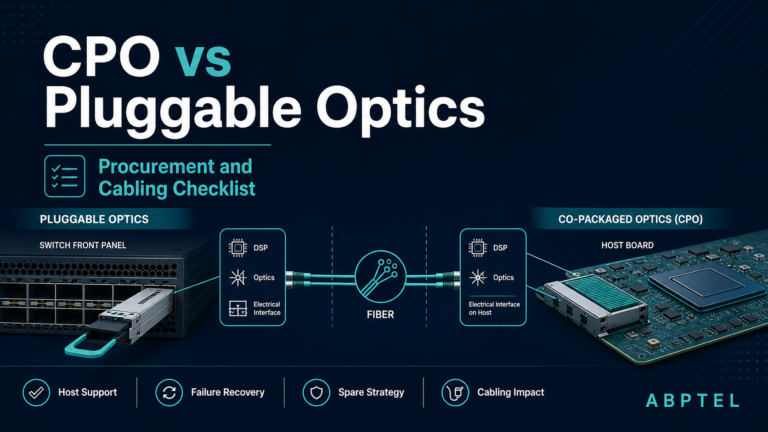
The expansion of high-speed networks for AI workloads, data centers, and carrier environments has made 400G optics a key investment for procurement teams. However, selecting the right transceivers requires careful consideration of electrical and optical standards, fiber infrastructure, power consumption, thermal management, and software compatibility. This comprehensive guide explores five critical dimensions procurement teams must address, from standards alignment and optical reach planning to interoperability with switches and platforms. By delving into mechanical constraints and cost-risk analysis, we’ll ensure that engineers, planners, and managers fully understand how to evaluate 400G transceivers for optimal reliability, scalability, and ESG compliance—all while navigating the economic and geopolitical factors affecting supply chains. Each chapter methodically dissects a specific aspect of these decisions, offering actionable insights to de-risk procurement and streamline deployments.
Standards, Form Factors, and Interoperability Checks That Shape Smart 400G Transceiver Buying

Before procurement compares price, it needs to confirm that the transceiver under review is built on the right standards stack for the intended network role. For 400G Ethernet, that usually means checking alignment with the IEEE specifications that define lane signaling, optical interfaces, and forward error correction. Early and current 400G designs often depend on 8x50G PAM4 or 4x100G PAM4 architectures, so buyers should verify whether the host platform expects 400GAUI-8 or 400GAUI-4. A module can look correct on paper yet still fail in deployment if the switch ASIC, port lane mapping, or firmware expects a different electrical interface.
The optical side deserves equal scrutiny. Procurement should not treat 400G as one interchangeable class. SR8, DR4, FR4, and LR4 serve different environments, with different media, connector types, and platform implications. That distinction matters even before fiber planning begins, because the selected optical PMD determines whether the organization is buying for short-reach multimode links, single-mode parallel optics, or duplex wavelength-multiplexed transport. It also affects future flexibility. For example, DR4 is often attractive where 4x100G breakout is part of the design, while FR4 and LR4 are usually chosen for duplex single-mode simplicity rather than breakout convenience. Buyers that need a quick comparison of these tradeoffs can reference this overview of 400G DR4, FR4, and LR4 transceivers.
Form factor is not a cosmetic choice. QSFP-DD usually delivers the best faceplate density, but many platforms cap slot power around the mid-teens in watts. OSFP typically offers more thermal headroom, which can be decisive for higher-power optics and coherent 400G variants. Procurement teams should therefore match the transceiver not only to the port type, but also to the switch thermal design, airflow direction, and approved operating range. A compliant module that overheats in a dense rack is still the wrong purchase.
Interoperability is where many buying mistakes surface. The checklist should include CMIS version support, digital diagnostics exposure, and the exact network software release needed to manage the module correctly. FEC must also line up at both ends. PAM4 links depend on RS-FEC, and mismatched settings can cause unstable links, poor error margins, or outright failure. Finally, buyers must confirm whether the platform enforces coded optics, approval lists, or licensing rules for third-party modules. A lower-cost transceiver loses its value fast if it is blocked by policy, unsupported by the operating system, or invisible to management tools.
Choosing the Right Reach and Fiber Path: What Procurement Teams Should Verify Before Buying 400G Transceivers

After confirming the correct standards and form factors, procurement teams need to match each 400G optic to the real fiber plant it will run on. This is where many expensive mistakes begin. A transceiver that fits the switch may still fail the deployment if the connector type, link loss, or breakout plan does not align with the cabling already installed.
The first question is simple: multimode or single-mode? For short in-row or pod links, multimode options such as SR8 can be practical, but their reach is limited, typically around 100 m on OM4 and sometimes up to 150 m on OM5. For longer data center links, single-mode usually gives procurement more flexibility. DR4 is commonly used up to 500 m, FR4 up to 2 km, and LR4 up to 10 km. Those distances are only meaningful, however, if the full channel loss stays within budget. A DR4 link often allows about 3 to 3.5 dB, while FR4 is closer to 6 dB and LR4 about 6.4 dB. Every connector, patch panel, splice, and meter of fiber consumes part of that margin.
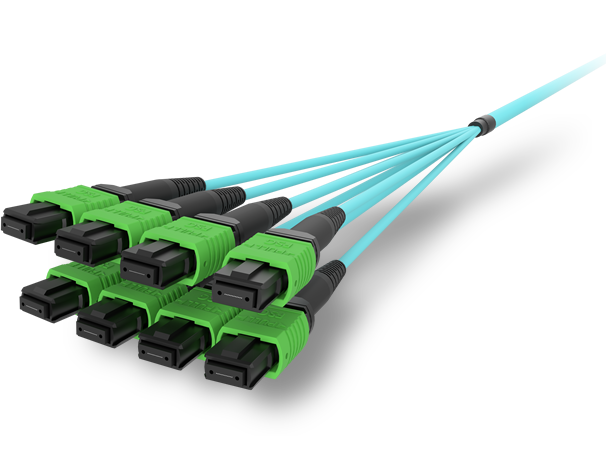
That is why procurement should ask for a loss model, not just a reach number. LC duplex links may see about 0.2 to 0.35 dB per mated pair. MPO connections on single-mode links can be closer to 0.35 to 0.5 dB. Dirty endfaces can push losses higher and create return-loss problems. Teams buying DR4 or SR8 must also confirm MPO type, polarity, and gender. A wrong trunk polarity or connector format can turn a standards-compliant purchase into a field rework project. For a deeper look at these migration pitfalls, see this guide on 400G and 800G MPO/MTP loss budget and polarity.
Breakout planning matters just as much as raw reach. DR4 can support 4×100G breakout with the proper MPO-to-LC harness and host support, which can improve port economics and simplify staged upgrades. FR4 and LR4 do not provide that same simple optical breakout path because they send 400G over a duplex pair using multiple wavelengths. Procurement teams should therefore avoid assuming that every 400G port offers the same migration options.
The safest buying decision comes from mapping each transceiver type to an exact cabling scenario: fiber grade, connector family, expected insertion loss, patching complexity, and any future breakout need. When those physical details are verified early, the later work of platform compatibility and operational testing becomes far more predictable.
The Compatibility Gate: What Procurement Teams Must Verify in Switch Software, FEC, CMIS, and 400G Interoperability

After matching reach, fiber type, and breakout design, procurement still has one major failure point to eliminate: a 400G optic that is technically correct on paper but incompatible with the host platform. Many 400G purchasing mistakes happen here. The transceiver may support the required PMD, yet fail because the switch ASIC expects a different host interface, the network OS lacks support for that module family, or the platform enforces coding restrictions. Before issuing a purchase order, teams should confirm that the switch explicitly supports the selected optic, form factor, and operating mode in the required software release.
That check must go deeper than a generic compatibility statement. A 400G port may support 400GAUI-8 or 400GAUI-4, and the lane mapping has to align with the module design. Breakout plans also matter at this stage. If the deployment depends on 1x400G to 4x100G operation, the host must support breakout logically, not just physically. This is especially important when comparing DR4 with duplex optics such as FR4 or LR4, where optical behavior and breakout expectations differ. For buyers weighing those tradeoffs, this overview of 400G DR4, FR4, and LR4 transceivers is a useful reference.
FEC compatibility is just as critical. At 400G, PAM4 signaling depends on RS-FEC, commonly KP4-based modes such as RS(544,514). If each end of the link uses a different FEC setting, the result may be link instability, high corrected error counts, or a link that never comes up. Procurement teams should require validation of both pre-FEC and post-FEC performance during qualification. A pre-FEC BER drifting toward about 2.4×10^-4 leaves little margin. Post-FEC performance should remain within the operator’s error objectives, often around 10^-12 or better.
Management compatibility is another practical checkpoint. Most 400G modules rely on CMIS 4.0 or 5.0 for telemetry, alarms, and control states. If the network OS cannot correctly read DOM data, expose alarms through APIs, or interpret module state machines, operations teams lose visibility when problems emerge. That matters even more for coherent variants, where advanced telemetry and profile controls are part of normal service management.
Interoperability should also be treated as a procurement requirement, not an assumption. Teams should verify multi-vendor link results, whitelist policies, firmware dependencies, and any approval licensing before rollout. A lower unit price means little if the module triggers warranty disputes or cannot be monitored properly. In practice, the safest purchase is the one that aligns standards, software support, FEC behavior, and management visibility before the modules ever reach the rack.
Power, Heat, and Port Density: The Physical Constraints Procurement Teams Must Validate Before Buying 400G Transceivers
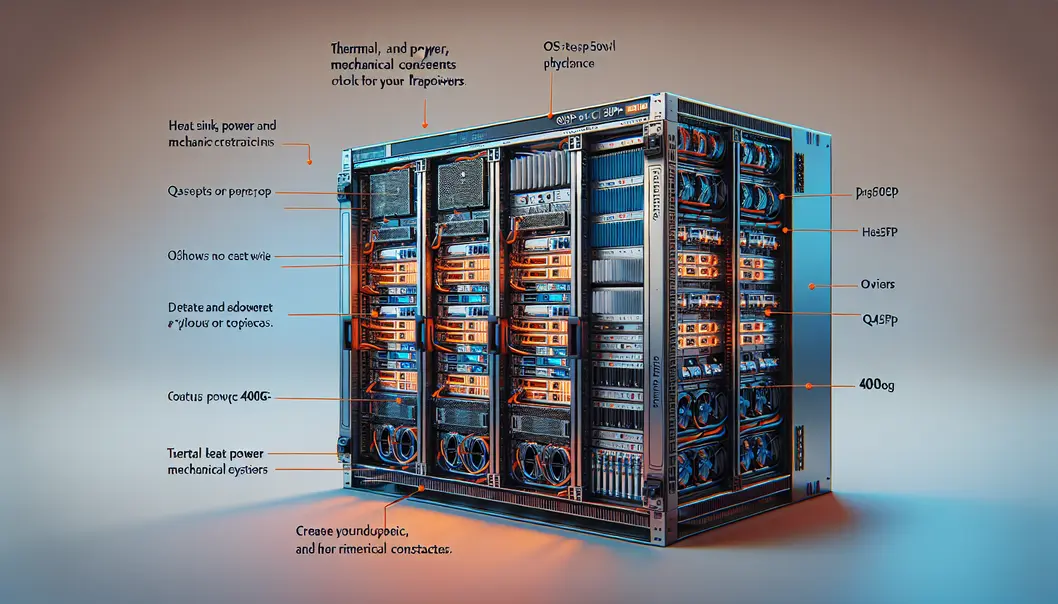
A 400G transceiver can be standards-compliant and interoperable on paper, yet still fail in deployment because the platform cannot power it, cool it, or physically accommodate it at scale. That is why procurement teams need to treat thermal, power, and mechanical fit as hard acceptance criteria, not secondary checks. The practical question is simple: can the chosen module run continuously in the target switch, rack, and airflow environment without derating, alarms, or shortened life?
Power draw varies sharply by optical type. Short-reach 400G SR8 modules often sit around 6 to 9 W. DR4 commonly lands near 8 to 11 W. FR4 typically rises to 9 to 12 W, while LR4 often reaches 11 to 14 W. Coherent options for DCI can push 14 to 20 W or more. Those numbers matter because many 400G cages have finite slot budgets, and some platforms reduce available power at higher ambient temperatures. A module that passes in a lab may become unstable in a hotter production row.
Thermals usually decide whether a procurement choice scales cleanly. Higher-power optics need better heat removal, tighter airflow control, and more margin between inlet temperature and module limits. In dense leaf-spine fabrics, a few extra watts per port can translate into a meaningful cooling burden across hundreds of links. This is especially important when comparing high-density form factors against options with more thermal headroom. Procurement should verify supported power classes, required heat sink profiles, and whether airflow is port-to-rear or rear-to-port. Mixing optics with different cooling expectations in the same environment often creates avoidable hot spots.
Mechanical fit also deserves closer scrutiny than many buying teams expect. QSFP-DD and OSFP support different density and thermal profiles, and the platform must be designed for the selected cage type. Insertion depth, latch access, faceplate spacing, and cable bend management all affect serviceability in crowded racks. For parallel optics, connector bulk adds another layer of risk. MPO trunks and breakout harnesses can strain front-panel clearance if cable routing was designed around duplex links. Teams planning DR4 breakout should validate both cage accessibility and fiber management early; this is where guidance on 400G/800G MPO and MTP loss budget and polarity becomes operationally relevant.
Environmental ratings complete the picture. Many data center optics are specified for 0°C to 70°C, while harsher sites may need wider ranges. Procurement should request reliability qualifications, field failure data, and any evidence of thermal derating under sustained load. A transceiver purchase is only safe when the module, the host, and the facility can all support the same real-world operating envelope.
Beyond Price Tags: How Procurement Teams Should Evaluate Cost, Compliance, Supply Chain Stability, and Risk Before Buying 400G Transceivers

After platform fit, thermal limits, and mechanical compatibility are confirmed, procurement risk shifts from the port to the business case. At 400G, the wrong buying decision rarely fails on headline price alone. It fails later through excess power costs, limited sourcing options, coding restrictions, tariff exposure, or a compliance gap that delays deployment. That is why procurement teams should compare transceivers through total cost of ownership, not unit cost.
A lower upfront price can hide meaningful long-term expense. Power draw differences of even a few watts per module become significant across large fleets, especially when cooling overhead is included. Fiber plant decisions also shape cost. Parallel-optics designs may reduce transceiver cost in some links, yet increase spending on MPO trunks, polarity management, inspection tools, and technician training. Duplex single-mode options can simplify cabling, but may raise optics cost and reduce breakout flexibility. Teams planning a broader migration should align purchasing with port architecture, sparing models, and future density targets, especially when 400G is a step toward higher-speed fabrics. For organizations mapping that path, this overview of migrating 100G to 400G is closely related.
Supply chain discipline matters just as much as technical fit. Lead times can vary sharply by reach, form factor, and DSP content. Coherent and longer-reach optics often carry greater availability risk. Procurement should request country of origin, second-source options, lifecycle status, and notice periods for end-of-life changes. A module that is technically qualified but available from only one geography may create avoidable operational exposure. Multi-vendor approval, buffer stock for critical links, and advanced replacement terms reduce that risk. So does checking whether the host platform permits third-party coding or quietly imposes whitelist restrictions that limit sourcing flexibility.
Compliance review should be built into the RFQ, not treated as paperwork after selection. Teams should confirm RoHS, REACH, WEEE, and any trade or government purchasing requirements that apply to the deployment. Import duties, HTS classification, and export-control exposure can materially change landed cost. This is especially important for modules that rely on advanced optical engines or coherent silicon. Safety and sustainability also belong in the same review. Laser labeling, handling procedures, conflict-minerals reporting, and e-waste programs all affect procurement quality.
The strongest 400G buying process therefore balances cost, continuity, and control. It asks whether the module can be sourced repeatedly, supported contractually, operated efficiently, and deployed without regulatory surprises. That discipline turns a transceiver purchase from a one-time transaction into a resilient infrastructure decision.
Final thoughts
Procurement teams play a crucial role in ensuring the reliability, scalability, and cost-effectiveness of 400G transceiver deployments. By aligning decisions with IEEE standards, planning fiber and breakout designs, ensuring switch and FEC compatibility, addressing thermal and power constraints, and navigating supply chain risks, procurement professionals can de-risk investments while optimizing the lifecycle of optical networks. With these insights at hand, organizations can confidently deploy 400G infrastructure that meets modern performance standards, ESG goals, and budget requirements.
Simplify your 400G transceiver deployment. Talk to ABPTEL today for expert advice on optics, cabling, and interconnect solutions.
Learn more: https://abptel.com/contact/
About us
ABPTEL offers cutting-edge optical transceivers, MTP/MPO cabling systems, DAC and AOC cables, PoE switches, FTTA solutions, and advanced fiber tools. Designed for data center, AI, telecom, and enterprise customers, our solutions deliver unmatched reliability and scalability tailored to your high-speed network projects.
Talk to ABPTEL
Looking for the right optical hardware for your AI data center, GPU cluster, or FTTA project? ABPTEL ships from Shenzhen with OEM/ODM support, fast lead times, and engineering-level pre-sales advice.
- 🔥 400G & 800G OSFP / QSFP-DD Transceivers — for AI training fabrics and hyperscale spine-leaf
- 📡 MPO / MTP High-Density Cabling — 12 / 24 / 32-fiber for high-density data centers
- ⚡ AOC & DAC Cables — short-reach GPU interconnects, OEM compatible
- 🧩 SFP / SFP+ / SFP28 / QSFP28 Modules — 1G to 100G optical transceivers
- 📋 Data Center Cabling Solutions — end-to-end design guide
- ❓ Read our FAQ — compatibility, polarity, lead time, MOQ
💬 Get a quote in 12 hours: Contact Candy · WhatsApp +86 188 1445 5697 · candy@abptel.com