The rise of artificial intelligence has created unprecedented demands on data center networks, prompting a shift to ultra-high-speed optical technologies like 400G and 800G optics. These components are not mere upgrades but foundational necessities to support the data-heavy operations of AI, machine learning, and big data analytics. From handling higher traffic densities efficiently to redefining scalability in hyperscale data centers, the need for 400G and 800G optics stems from architectural and operational imperatives. As AI workloads grow, procurement managers, network engineers, and system integrators must understand why these optics are critical to maintaining performance, reducing latency, and optimizing cost. This article examines this demand across AI-driven workload requirements, hyperscale scalability, interconnect innovations, cost implications, and future-readiness. Each chapter builds towards a clear picture of why these advances in optical networking matter in AI data centers today and for tomorrow.
Why AI Training Traffic Is Forcing a New Era of 400G and 800G Network Bandwidth

AI workloads are changing the network from a support layer into a direct limiter of compute value. In conventional data centers, much of the traffic moved north–south between users, applications, and storage. AI clusters behave differently. Training and large-scale inference create relentless east–west traffic between accelerators, switches, and memory domains. That shift is a major reason demand for 400G and 800G optics is rising so quickly.
The pressure starts with distributed computing. Large models rarely train on one server. They are split across many accelerators using data, tensor, pipeline, and expert parallelism. Each method creates frequent collective operations such as all-reduce, all-gather, and reduce-scatter. These exchanges happen every training step, not occasionally. If the network cannot move gradients, activations, and parameters fast enough, expensive accelerators sit idle. In AI infrastructure, poor network bandwidth does not just slow packets. It lowers model throughput, lengthens job completion time, and wastes compute investment.
That is why per-node bandwidth keeps climbing. A server connected at 400G may be adequate for one generation of accelerator, then become restrictive in the next. As accelerator memory bandwidth and internal fabric speeds rise, inter-node links must keep pace. Otherwise, the gap between intra-node speed and inter-node speed widens, and scaling efficiency drops. For many operators, 400G has become the practical baseline, while 800G is increasingly necessary where cluster sizes, model sizes, and synchronization intensity are highest.
Traffic shape matters as much as raw volume. AI jobs generate synchronized bursts and many-to-many exchanges that punish oversubscribed networks. A fabric that looks acceptable for enterprise workloads can struggle badly under collective communication. Tail latency becomes especially harmful. One delayed flow can stall an entire training step. That reality pushes operators toward higher bisection bandwidth, flatter topologies, and faster optical interconnects. It also explains why 800G is not simply a speed upgrade. It is a way to preserve scaling efficiency as cluster sizes move from hundreds of accelerators to thousands.
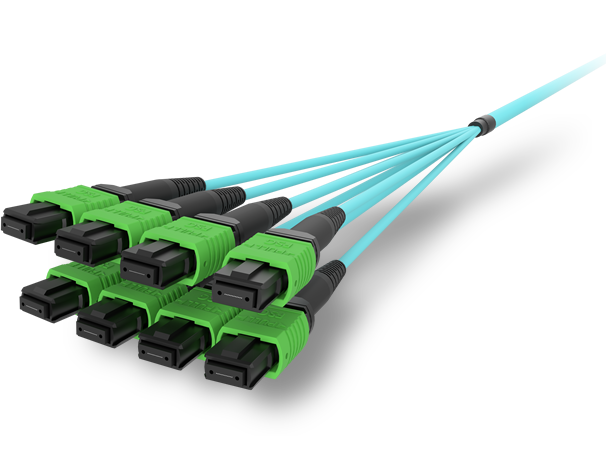
The optics layer sits at the center of that transition because electrical links cannot cover these distances and densities efficiently. Inside rows and across leaf-spine fabrics, operators need pluggable links that deliver high throughput, predictable latency, and manageable power. Choices around form factor, reach, and fiber plant now affect AI economics directly, especially when dense parallel optics and connector design shape loss budgets and migration paths. That is why planning often extends beyond transceivers to cabling strategy, including 400G and 800G MPO/MTP loss budget and polarity, as higher-speed fabrics expand toward hyperscale architectures.
Why Hyperscale AI Fabrics Are Pulling 400G and 800G Optics Into the Data Center Core
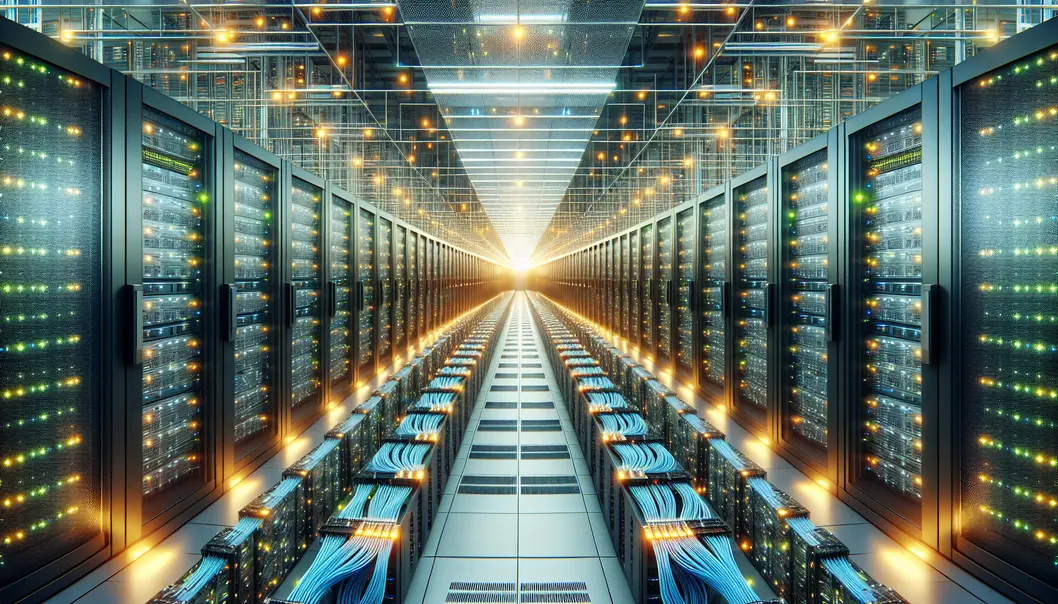
The shift from AI workload growth to network design is most visible at hyperscale. Once clusters move from hundreds of accelerators to thousands, the network stops being a supporting layer and becomes a hard limiter on compute efficiency. That is why demand for 400G and 800G optics is rising so quickly. These speeds map directly to the scale, radix, and traffic behavior of modern AI fabrics.
In large training environments, operators are no longer building around modest oversubscription. They are pushing toward near-non-blocking leaf-spine fabrics, multi-tier Clos designs, and flatter topologies that keep hop counts low and bisection bandwidth high. The reason is simple: collective operations punish congestion and delay. Every extra hop adds latency. Every blocked flow stretches training step time. At small scale, those penalties are tolerable. At hyperscale, they multiply across thousands of nodes and millions of synchronized exchanges.
This is where 400G and 800G become practical design tools, not just faster port options. A 25.6T switching generation aligns naturally with dense 400G deployments. The 51.2T generation does the same for 800G, either as native server-facing links or as breakout paths that support two 400G connections from one higher-speed port. That flexibility matters during migration. Operators can expand fabric capacity without replacing every server link at once, which protects capital while still lifting aggregate throughput.
Hyperscale demand also reflects a density problem. AI clusters need more bandwidth per rack, per row, and per spine layer, but they cannot expand cabling and switch footprints without limit. Higher-speed optics let architects raise bandwidth without doubling physical complexity. A single 800G port can replace multiple lower-speed links, simplify topology, and preserve precious front-panel real estate. The result is a fabric that scales more cleanly as accelerator counts grow.
Those gains only work if optics fit the physical realities of the data center. Most AI links sit in the short-reach zone, from a few meters to a few hundred meters, which favors single-mode DR optics and breakout-friendly form factors. Cabling density, polarity, and insertion loss all become operational issues at scale, especially as 400G and 800G parallel optics increase fiber counts. For that reason, many teams pair network upgrades with tighter plant design and validation practices, including guidance on 400G and 800G MPO/MTP loss budget and polarity.
The broader point is that hyperscale AI does not merely prefer faster optics. It structurally depends on them. As clusters grow wider, traffic grows more synchronized, and switching silicon grows denser, 400G and especially 800G become the bandwidth building blocks that make large AI data centers economically and operationally viable.
How Optical Interconnect Innovation Is Powering 400G and 800G AI Data Center Networks

The surge in AI data center traffic is not being met by faster switches alone. It is being enabled by a broader optical and networking shift that makes 400G and 800G practical at scale. These links sit at the intersection of switch silicon, module design, signaling physics, and fabric architecture. Their rise reflects a simple reality: AI clusters need far more bandwidth per server, far more aggregate bisection bandwidth, and far tighter control over latency variation than traditional enterprise networks ever demanded.
What makes this generation different is the maturity of 100G-per-lane signaling. That electrical foundation supports 400G through four lanes and 800G through eight, giving operators a clean path to higher radix fabrics without redesigning the entire network model. PAM4 modulation is central to that leap. It doubles the number of bits sent per symbol, which raises throughput efficiently, but it also increases error sensitivity. That is why stronger forward error correction became essential. The result is a workable tradeoff: a modest latency penalty in exchange for reliable 400G and 800G transport inside dense AI fabrics.
Form factor evolution matters just as much. Earlier 400G deployments could fit comfortably within established thermal limits, but 800G pushed power density higher and made larger thermal envelopes more attractive. That shift helped newer module designs become the preferred choice for dense spine and aggregation layers. At the same time, breakout flexibility softened migration risk. An 800G port can often be split into two 400G links, which lets operators raise fabric capacity before every server moves to native 800G. This is one reason 800G adoption accelerates even while 400G remains dominant at the edge.
The media mix is also changing. Passive copper still works for very short reaches, but AI clusters increasingly rely on single-mode optical links for consistency, reach, and operational simplicity. Short-reach DR optics have become especially attractive for row and cluster connections, while longer FR-class options support broader campus layouts. As link counts rise, cabling discipline becomes part of network performance, not just installation practice. Clean connector handling, polarity planning, and insertion loss control directly affect margin at these speeds, which is why detailed guidance on 400G and 800G MPO/MTP loss budget and polarity has become more relevant.
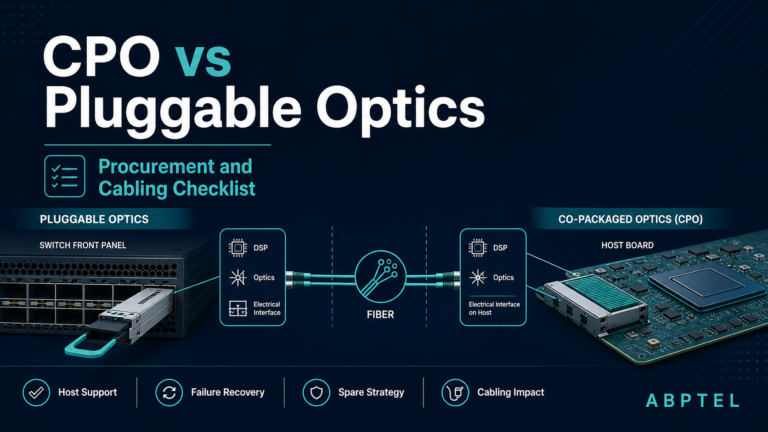
The next wave is already visible. Linear pluggable optics aim to reduce power and latency for short links by removing onboard DSP functions, while co-packaged optics promise to ease electrical loss as lane speeds climb further. Neither changes the current center of gravity. For AI data centers being built now, 400G and 800G succeed because the optical ecosystem around them is finally mature enough to deliver scale, flexibility, and predictable performance together.
Why Cost Efficiency Is Steering 400G and 800G Optics Decisions in AI Data Centers
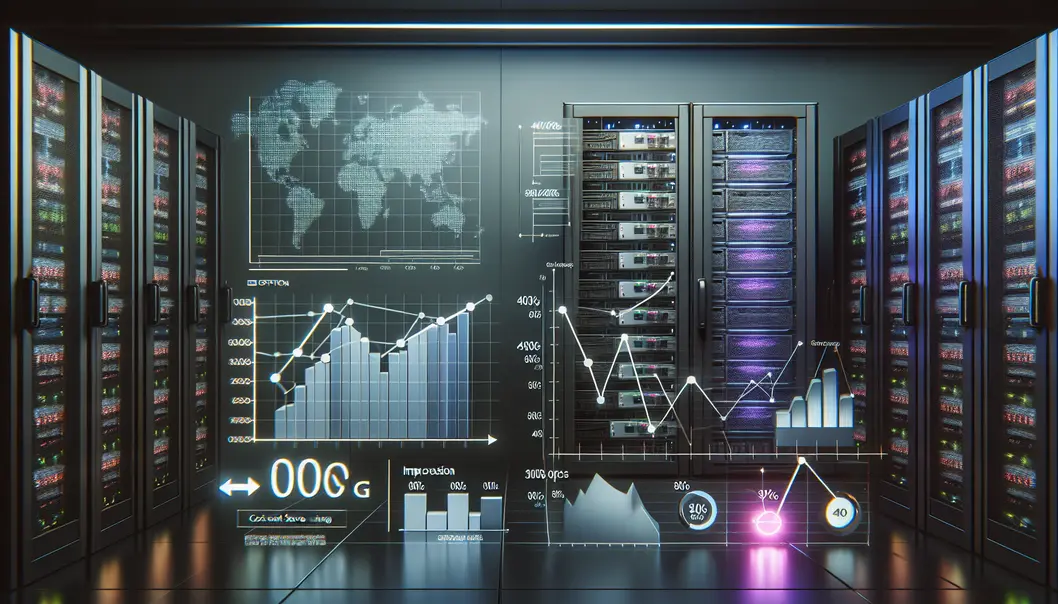
More AI clusters are moving to 400G and 800G optics not because operators want faster links in isolation, but because network economics now sit directly inside model economics. When training jobs span thousands of accelerators, every point of lost utilization becomes expensive. A slower or oversubscribed fabric stretches step time, leaves compute waiting on collectives, and turns premium accelerator capacity into stranded capital. In that environment, optics are no longer a peripheral line item. They are a lever for protecting return on the most expensive assets in the building.
That is why cost optimization in AI data centers looks different from traditional enterprise networking. The lowest purchase price per module rarely wins. Operators instead evaluate cost per useful delivered bit, cost per trained model iteration, and even cost per percentage point of accelerator utilization. A 400G link remains attractive because it sits on a mature volume curve, has broad ecosystem support, and aligns well with current server attachment. It often delivers the best balance of price, availability, and operational familiarity. Yet 800G becomes economically compelling as soon as it reduces fabric tiers, cuts oversubscription, or avoids doubling switch count and rack footprint.
This is especially visible in 51.2T switch generations. One 800G port can serve as native high-speed uplink capacity or split into 2x400G during migration, which helps operators preserve existing server investments while scaling bisection bandwidth. That flexibility lowers transition risk and slows the depreciation of installed 400G infrastructure. It also improves planning discipline, since architects can stage upgrades around workload growth instead of forcing full replacement cycles. A detailed view of this tradeoff appears in this guide to the true cost of a data center port, where optics, power, density, and lifecycle factors matter as much as list price.
Power and thermal limits sharpen the equation. Dense 800G deployments raise module power, chassis cooling demands, and rack-level energy consumption. Even so, operators often accept that penalty when higher-speed optics reduce hop count or improve job completion time. The relevant question is not whether 800G consumes more power than 400G per module. It is whether it lowers the total energy and capital required to move a given AI workload through the network. In many large fabrics, the answer is yes.
Cabling and operations also shape total cost. Standardizing on single-mode short-reach optics simplifies sparing, reach planning, and plant management across rows and pods. Cleaner migration paths, breakout support, and fewer bespoke link types reduce human error and downtime. That operational simplicity is often underestimated, yet in AI environments it compounds into lower lifecycle cost and faster expansion readiness.
Scaling AI Data Centers with Future-Ready 400G and 800G Optics

As AI clusters expand, optics strategy shifts from simple speed upgrades to long-term fabric planning. The real question is not only how to add bandwidth, but how to add it without locking the network into costly redesigns a generation later. That is why 400G and 800G optics sit at the center of AI expansion plans. They match current switch silicon, support flexible migration paths, and give operators room to grow from dense training pods into much larger fabrics.
In practical terms, 400G remains the access-layer anchor for many AI deployments because it aligns well with today’s server NIC bandwidth, mature module supply, and proven cabling designs. Yet expansion rarely stops at the rack. As clusters move toward thousands of accelerators, operators need more bisection bandwidth and fewer compromises on oversubscription. This is where 800G becomes less of a premium option and more of a structural requirement. A 51.2T switch can be used either as 64 native 800G ports or split into 128 lanes of 400G connectivity, allowing a phased buildout that preserves current investments while preparing the fabric for higher-speed hosts.
That flexibility is especially important in AI environments, where infrastructure cycles rarely move in perfect sync. Accelerators, NICs, switches, and optics often arrive on different timelines. Breakout support lets network teams deploy 800G in spine and aggregation layers first, then migrate server connections later without a full replacement event. This smooth upgrade path is one reason 800G demand is rising even where 400G servers still dominate. For planners comparing module types and migration tradeoffs, this overview of 400G vs. 800G OSFP transceivers for data center AI networks reflects the design choices shaping current rollouts.
Future-readiness also depends on power, thermals, and operational simplicity. Higher port speeds increase bandwidth density, but they also tighten thermal envelopes and loss budgets. AI operators therefore favor optics choices that scale cleanly across short-reach single-mode links, reduce cabling complexity, and fit repeatable deployment models. Consistent use of DR-class optics across rows and pods simplifies sparing, qualification, and maintenance. At the same time, emerging lower-power approaches may improve efficiency for controlled short reaches, especially as lane speeds continue rising.
The broader point is that future-ready optics are not defined by the highest possible speed. They are defined by how well they support staged expansion, mixed-rate fabrics, and the economics of keeping expensive compute fully utilized. In AI data centers, 400G provides the mature base, while 800G creates the headroom that growth now demands.
Final thoughts
The shift to 400G and 800G optics in AI data centers is not simply about speed; it’s a holistic necessity driven by workload complexity, hyperscale growth, and the demand for optimized interconnections. These technologies ensure the infrastructure is capable of meeting the immense computational and traffic demands posed by AI workloads while also offering critical cost and scalability advantages. As AI evolves, data center planners, engineers, and procurement managers must integrate these high-speed optics as foundational components for the future. By adopting the latest in optical innovations, they ensure their networks remain robust, efficient, and ready to tackle emerging trends in AI-based applications and workloads.
Talk to ABPTEL about high-speed optics, MTP/MPO cabling, and data center interconnect solutions that scale for AI workloads.
Learn more: https://abptel.com/contact/
About us
ABPTEL provides high-speed optical transceivers, MTP/MPO cabling systems, DAC and AOC cables, PoE switches, FTTA solutions, and fiber tools. These products are designed for data center, AI infrastructure, telecom needs, and network implementations, offering reliability and scalability for modern demands.
Talk to ABPTEL
Looking for the right optical hardware for your AI data center, GPU cluster, or FTTA project? ABPTEL ships from Shenzhen with OEM/ODM support, fast lead times, and engineering-level pre-sales advice.
- 🔥 400G & 800G OSFP / QSFP-DD Transceivers — for AI training fabrics and hyperscale spine-leaf
- 📡 MPO / MTP High-Density Cabling — 12 / 24 / 32-fiber for high-density data centers
- ⚡ AOC & DAC Cables — short-reach GPU interconnects, OEM compatible
- 🧩 SFP / SFP+ / SFP28 / QSFP28 Modules — 1G to 100G optical transceivers
- 📋 Data Center Cabling Solutions — end-to-end design guide
- ❓ Read our FAQ — compatibility, polarity, lead time, MOQ
💬 Get a quote in 12 hours: Contact Candy · WhatsApp +86 188 1445 5697 · candy@abptel.com