Different Types and Specifications of ADSS Fiber Optic Cables?

When it comes to outdoor fiber optic communication, ADSS1 (Aerial Dielectric Self-Supporting) fiber optic cables stand out for their unique features. However, choosing the right ADSS cable can be overwhelming due to the variety of types and specifications available. Whether you’re a project manager, telecom engineer, or procurement specialist, understanding the different types of ADSS cables and their specifications is crucial for making the right choice for your project.
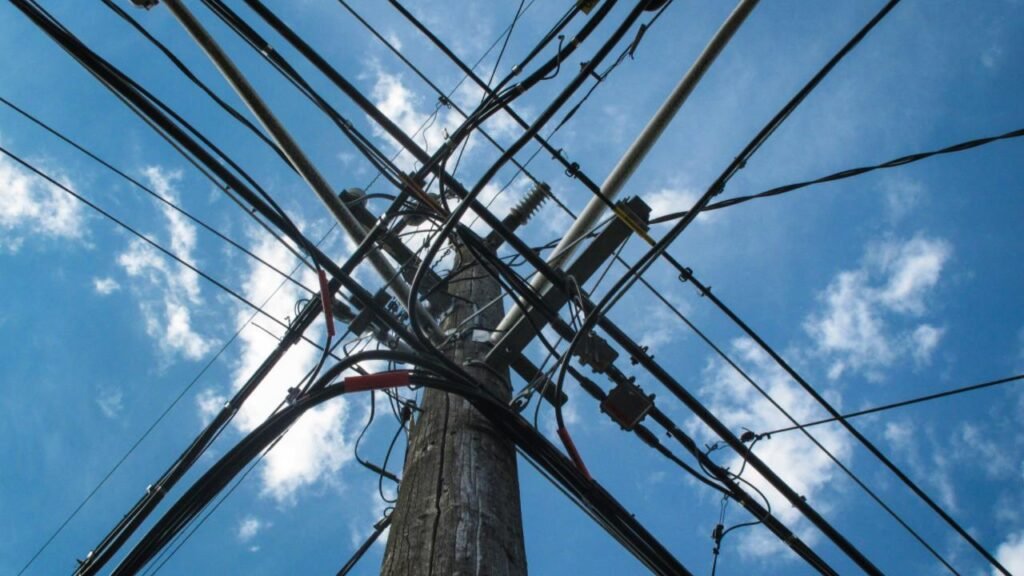
ADSS cables are widely used in outdoor telecom projects, especially for long-distance data transmission. The cables feature a dielectric construction that enables them to be suspended on poles without the need for metallic support, making them ideal for high-voltage environments.
Transitioning from selecting a cable type to understanding core counts, it’s important to know the factors that influence your decision-making process in choosing ADSS cables. Let’s dive into the core components and specifications that make these cables unique.
Choosing the Right Core Count for ADSS Cables: Which Size Fits Your Project?
Choosing the right core count is critical when selecting ADSS fiber optic cables, as it directly impacts data capacity, installation costs, and long-term performance. But how do you determine the right core count for your specific needs?
The core count of an ADSS cable refers to the number of optical fibers in the cable. Higher core counts allow for greater data capacity but also increase costs and cable size. Understanding your data capacity requirements and network design is essential in making the right selection.
Dive Deeper into Core Count Selection
ADSS fiber optic cables are available in a variety of core counts, ranging from 2 fibers to several dozen. The core count you choose will depend on several key factors:
- Project Size and Data Capacity Needs: If your project involves high-bandwidth data transmission, you will likely need a higher core count to support multiple data streams. For smaller, less complex installations, a lower core count might suffice.
- Budget Considerations: ADSS cables with more cores generally come at a higher cost due to increased material and manufacturing complexity. Weighing your project’s data requirements against your budget is crucial.
- Future Expansion: If you expect the need for increased bandwidth in the future, opting for a cable with a higher core count might save you the trouble of replacing cables later.
Core Count vs. Cost: Understanding the Trade-Off
| Core Count | Estimated Cost per Meter | Recommended Use Case | Maximum Supported Bandwidth |
|---|---|---|---|
| 2 | Low | Small businesses, short-distance connections | Basic broadband |
| 6-12 | Moderate | Medium-sized offices, local networks | High-speed internet |
| 24-48 | High | Large enterprises, data centers | Gigabit speeds |
| 96+ | Very High | Telecom backbone, large-scale data centers | Multiple Gbps |
The choice of core count will depend not only on your current needs but also on your growth projections. If scalability is important, you might opt for a higher core count, even if it is more expensive upfront.
Advantages and Applications of ADSS Multi-Tube Fiber Optic Cables
Multi-tube ADSS fiber optic cables are designed to handle high-density data transmission while maintaining durability in harsh environmental conditions. But what makes multi-tube ADSS cables different from standard ADSS cables, and where are they most commonly used?
ADSS multi-tube cables are built with multiple tubes within a single jacket, allowing for more efficient use of fiber cores. These cables offer excellent protection against external elements, making them suitable for installation in aerial and underground applications.
Dive Deeper into the Advantages of Multi-Tube ADSS Cables
The primary advantage of multi-tube ADSS cables lies in their ability to support large amounts of data while offering greater flexibility for installation. Here are some specific advantages of multi-tube ADSS cables:
- Higher Fiber Density: Multi-tube cables can pack more fiber cores into a single jacket, making them ideal for networks that require high-density data transmission. This higher density allows for more efficient use of space in tight installations.
- Improved Durability: With the additional tube protection, multi-tube ADSS cables offer enhanced resistance to mechanical damage, moisture, and extreme temperatures. This makes them particularly useful in outdoor environments.
- Reduced Installation Complexity: When you install multi-tube cables, you benefit from the simplicity of using a single cable for multiple fiber runs, reducing the overall installation time and costs.
Key Applications of Multi-Tube ADSS Cables
- Telecommunications Networks: These cables are commonly used in backbone networks2 where large bandwidth is required over long distances.
- Data Centers: For data centers needing high-speed, high-volume fiber optic connections, multi-tube ADSS cables provide a scalable and efficient solution.
- FTTH (Fiber to the Home): Multi-tube ADSS cables can be used for FTTH3 deployments, especially in urban and suburban areas where high data density is required.
| Application Area | Benefits of Multi-Tube ADSS Cables | Ideal Fiber Count | Use Case Example |
|---|---|---|---|
| Telecom Backbone | High durability, higher data capacity | 48-96 | City-wide network infrastructure |
| Data Centers | Space-saving, high fiber density | 24-144 | Server room fiber connections |
| FTTH Installations | Scalable, cost-effective for high-density areas | 24-48 | Urban fiber network rollouts |
How Do ADSS Cables Compare with Other Fiber Optic Cables?
While ADSS cables are ideal for outdoor and aerial installations, how do they compare with other types of fiber optic cables, like loose tube or tight-buffered cables?
ADSS cables are unique in their self-supporting design, which makes them suitable for installation without the need for additional supporting hardware like steel cables. Compared to loose tube and tight-buffered cables, ADSS offers more versatility in challenging environments.
ADSS vs. Loose Tube vs. Tight-Buffered: Which Is Best for Your Project?
| Feature | ADSS Fiber Optic Cable | Loose Tube Fiber Optic Cable | Tight-Buffered Fiber Optic Cable |
|---|---|---|---|
| Construction | Dielectric, self-supporting | Tubes filled with gel or water | Tight jacket around fibers |
| Environmental Suitability | High wind, UV resistance, aerial use | Outdoor use, needs support structure | Indoor use, often in ducts |
| Fiber Protection | High due to self-supporting design | Moderate protection, needs cable trays | Excellent for tight installations |
| Application | Aerial, high-voltage environments | Outdoor and underground | Indoor networks, data centers |
ADSS cables are preferred for overhead applications where high-voltage electrical lines are present, as they do not require grounding. Loose tube cables, on the other hand, are better for underground installations due to their flexibility and easier splicing. Tight-buffered cables are typically used indoors for connections that require flexibility and higher protection.
Conclusion
Selecting the right ADSS fiber optic cable is crucial to the success of your fiber optic installation. Whether you’re choosing the appropriate core count or deciding between different cable types, understanding the various specifications and applications can help you make a more informed decision. For outdoor telecom and data transmission projects, ADSS cables provide unparalleled durability, flexibility, and performance, making them the ideal choice for a wide range of installations. When in doubt, consulting with fiber optic experts or suppliers like Abptel can guide you toward the best solution tailored to your project needs.
If you have any further questions or would like to learn more about ADSS cables or any of our fiber optic solutions, feel free to contact us at Candy@abptel.com or visit our website at www.abptel.com.
Footnotes:
ADSS Fiber Optic Cable Construction: ADSS cables are known for their self-supporting design, making them suitable for high-voltage and outdoor environments, where traditional metallic support cables are unnecessary. ↩
Telecom Backbone Networks: ADSS cables are commonly deployed in telecom backbone networks, where high-speed, long-distance data transmission is crucial. ↩
FTTH Installations: ADSS cables are ideal for Fiber to the Home (FTTH) applications, offering a scalable and durable solution for high-density urban and suburban deployments. ↩
Talk to ABPTEL
Looking for the right optical hardware for your AI data center, GPU cluster, or FTTA project? ABPTEL ships from Shenzhen with OEM/ODM support, fast lead times, and engineering-level pre-sales advice.
- 🔥 400G & 800G OSFP / QSFP-DD Transceivers — for AI training fabrics and hyperscale spine-leaf
- 📡 MPO / MTP High-Density Cabling — 12 / 24 / 32-fiber for high-density data centers
- ⚡ AOC & DAC Cables — short-reach GPU interconnects, OEM compatible
- 🧩 SFP / SFP+ / SFP28 / QSFP28 Modules — 1G to 100G optical transceivers
- 📋 Data Center Cabling Solutions — end-to-end design guide
- ❓ Read our FAQ — compatibility, polarity, lead time, MOQ
💬 Get a quote in 12 hours: Contact Candy · WhatsApp +86 188 1445 5697 · candy@abptel.com