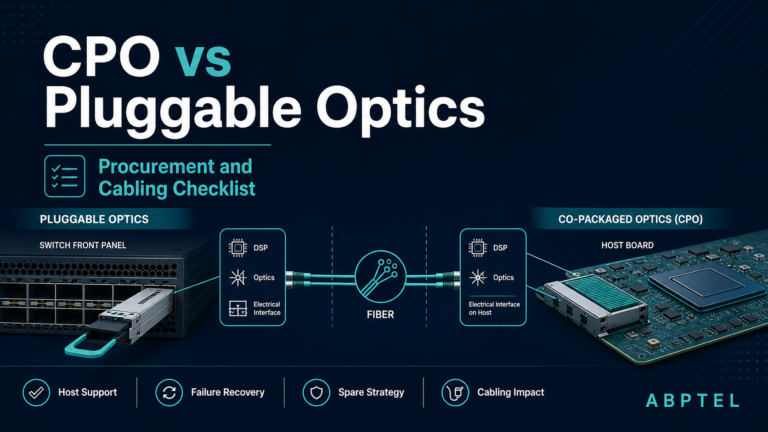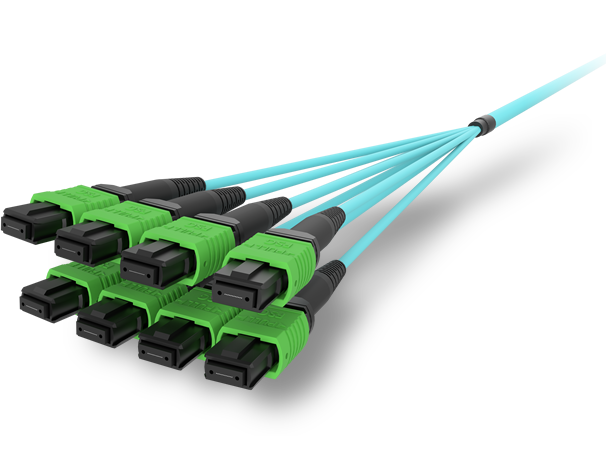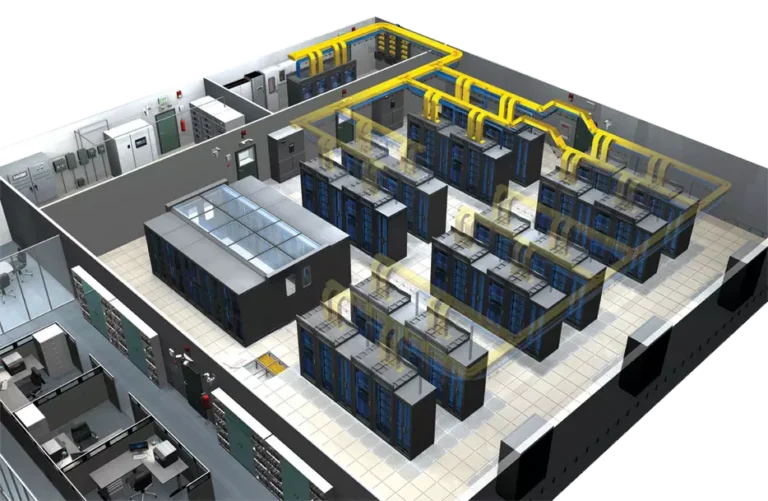
As data demand soars and workloads intensify, high-speed optics have become the backbone of modern hyperscale and enterprise data centers. From pluggable transceivers to coherent optics, these technologies enable scalable connectivity and support bandwidth-hungry architectures like leaf-spine networks. Evaluating high-speed optics, however, requires a sharp focus on technical standards, cost modeling, architecture design, and sustainability metrics. This guide breaks the evaluation into five practical dimensions: performance criteria, economic considerations, deployment strategies, risk management, and sustainability. Each chapter offers targeted insights to empower network engineers, AI planners, and IT managers in building future-ready data center infrastructures.
Defining the Technical Benchmarks That Matter When Evaluating High-Speed Optics for Data Centers
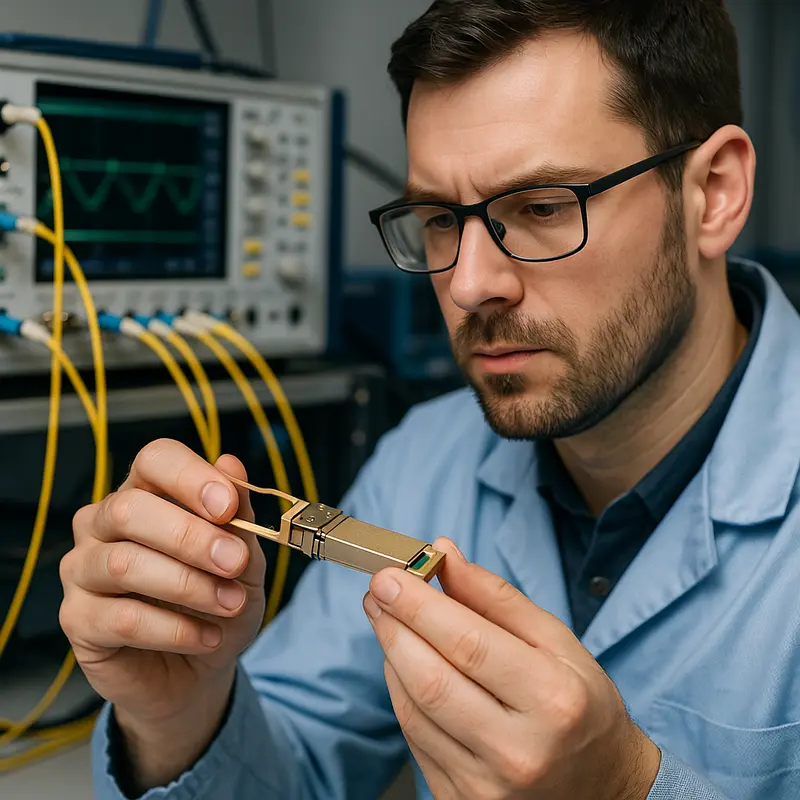
A sound evaluation of high-speed optics starts with standards, but it should never end there. In hyperscale and enterprise data centers, the real task is to determine whether a module meets the right standard and delivers enough operating margin under actual deployment conditions. That means reading beyond a speed label and checking how lane count, modulation, forward error correction, and reach interact with the switching platform, fiber plant, and application latency budget.
For 100G through 800G, that usually means comparing NRZ and PAM4 behavior. PAM4 enables higher throughput without doubling the baud rate, but it also narrows eye openings and raises sensitivity to noise, linearity issues, and insertion loss. As a result, a compliant module still depends heavily on FEC performance, host tuning, and channel quality. Pre-FEC bit error rates that are acceptable on paper can become operational risks if the link runs too close to the correction threshold. Evaluators should therefore focus on post-FEC stability under stress, not just pass or fail test results.
The most useful performance criteria are those that reveal margin. Optical transmit and receive values such as OMA, extinction ratio, receiver sensitivity, and especially TDECQ help show whether a link will remain stable as connectors age, temperatures rise, and patching changes. Link budget calculations should include realistic connector loss, panel loss, fiber attenuation, and a reserve for contamination or rework. This is particularly important when comparing parallel and duplex designs. A short-reach parallel option may look efficient, but tighter loss budgets and polarity complexity can reduce practical resilience.
Standards compliance must also be verified at several layers. IEEE clause alignment confirms expected PHY behavior, while MSA conformance helps preserve multi-vendor interoperability for form factors and optical interfaces. CMIS support matters just as much in operations. Without reliable telemetry for temperature, bias current, receive power, alarms, and FEC counters, troubleshooting becomes slower and pilot results become less trustworthy. In practice, strong manageability often separates a lab-successful optic from a production-ready one.
Thermal and mechanical fit are equally part of technical evaluation. A module that meets optical specs in isolation may underperform in a dense switch if airflow, heat sink class, or cage spacing are mismatched. This becomes more critical at 400G and 800G, where power draw directly affects faceplate density and sustained stability. The choice between single-mode and multimode infrastructure should also be assessed through this operational lens, not only by transceiver cost. For a deeper comparison of media strategy, see single-mode vs. multimode fiber considerations.
Measuring Cost per Bit and Long-Term Value in High-Speed Optics for Data Center Networks
The technical fit of an optical module matters, but the buying decision is rarely won on speed alone. In hyperscale and enterprise environments, optics must be judged by cost per delivered bit over time, not just purchase price. A low-cost module can become expensive if it demands higher cooling capacity, creates cabling complexity, or forces an early redesign during the next bandwidth upgrade. That is why economic evaluation should connect directly to the switching roadmap, expected link distances, and the planned fabric topology. In a modern leaf-spine optical architecture, the financial impact of optics scales quickly because every design choice repeats across hundreds or thousands of links.
A useful model starts with direct capital costs: transceivers, patch cords, trunks, cassettes, panels, cleaning tools, and spare inventory. From there, the picture becomes more revealing. Short-reach multimode options may look attractive when existing cabling is already in place, yet they can require parallel optics, MPO infrastructure, and stricter polarity management. Single-mode options often carry a different up-front profile, but they can reduce future migration friction and support a wider set of reaches with fewer architectural compromises. The right answer depends on whether the organization is optimizing for immediate refresh cost or for lower disruption across several upgrade cycles.
Operating expense often separates a merely affordable design from a financially durable one. Module power draw directly affects rack density, thermal headroom, and cooling cost. At 400G and especially 800G, a few watts per port become meaningful at scale. Higher optical power also increases thermal stress, which can affect reliability and replacement rates. A sound TCO model therefore includes electrical consumption, incremental cooling, expected failure rates, technician labor, and the cost of maintaining a sensible spares pool. It should also price operational risk. A module family with weaker supply continuity or inconsistent firmware behavior can create hidden costs through delayed deployments and longer troubleshooting cycles.
Lifecycle economics matter just as much. Optics should be evaluated for breakout flexibility, compatibility with the installed fiber plant, and fitness for 400G-to-800G or 800G-to-1.6T transitions. Designs that minimize stranded cabling and avoid premature panel replacement usually produce better long-term returns. Procurement teams should also weigh vendor diversification, lead times, and regional trade exposure, because a cheaper component with volatile availability can disrupt expansion plans and inflate effective cost.
The strongest economic decision is rarely the one with the lowest initial quote. It is the option that preserves performance margins, scales with the network roadmap, and keeps operational complexity under control while delivering the lowest true cost per usable gigabit over its service life.
How to Align Interoperability, Network Architecture, and Deployment Planning When Evaluating High-Speed Optics
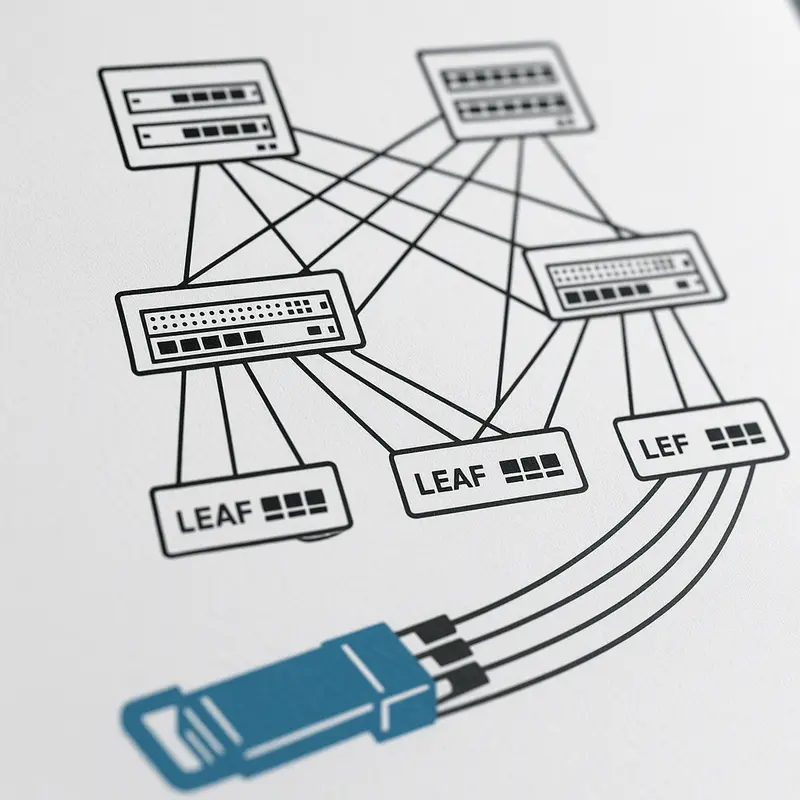
The strongest optics evaluation programs treat interoperability, architecture, and deployment as one decision, not three separate checklists. A module that looks excellent in a lab can still fail the real test if it does not map cleanly to the switching tier, the fiber plant, and the operating practices of the site. That is why high-speed optics must be assessed against the actual fabric design first. In a leaf-spine or super-spine environment, the key question is not only whether a port can run at 400G or 800G, but whether it can support the intended breakout patterns, lane mapping, connector strategy, and thermal profile without creating hidden constraints later. For teams planning dense east-west fabrics, this often means validating optics against the realities of a leaf-spine optical architecture, where scale, consistency, and predictable upgrades matter more than headline specifications.
Interoperability starts at standards alignment, but it cannot stop there. IEEE compliance, MSA conformity, and CMIS support provide the baseline, yet practical compatibility depends on how the module behaves with the host ASIC, NIC, firmware, and FEC implementation under load. PAM4 links are especially sensitive here. Host and module must agree on FEC mode, equalization behavior, and lane configuration, or the result can be unstable links, excess corrected errors, or poor margin under temperature stress. That is why serious evaluation includes multi-vendor validation with the exact switch platforms and breakout topologies intended for production. A 400G DR4 link that interoperates cleanly in a direct connection may behave differently once patch panels, polarity transitions, and representative insertion loss are introduced.
Deployment planning then turns those lab results into an operable design. The optics choice must match reach and cabling discipline. Parallel optics can deliver efficient high-density breakouts, but they increase dependence on MPO polarity control, low-loss trunks, and disciplined cleaning. Duplex single-mode designs can simplify moves and changes, but they may trade off breakout flexibility or alter migration economics. The decision between multimode and single-mode should therefore be made at the architecture level, not link by link. Faceplate density, airflow direction, module power class, and cable bulk also deserve equal weight, because an otherwise valid optic can become impractical in a tightly packed chassis.
The best deployment plans leave room for the next transition. They favor connector ecosystems, breakout models, and management visibility that can support 800G growth and eventually 1.6T, while keeping operations simple enough to scale. That balance between immediate interoperability and future architectural fit is what turns optical evaluation into a durable infrastructure decision.
Evaluating Supply Chain Risk and Geopolitical Exposure in High-Speed Optics Decisions

Selecting high-speed optics is not only a technical exercise. It is also a risk decision that can shape deployment speed, pricing stability, and long-term operability. A module that meets reach, power, and BER targets on paper may still create serious exposure if its supply chain is fragile, its component sources are concentrated, or its availability depends on unstable trade conditions. For hyperscale and enterprise data centers, this means optics evaluation should include a formal review of sourcing resilience alongside optical performance.
The first issue is concentration risk. Many modules appear to come from different suppliers, yet depend on the same small set of chip, laser, or packaging sources. That hidden dependency matters most at 400G, 800G, and emerging 1.6T, where advanced DSPs, optical engines, and high-speed packaging are harder to replace. If one upstream source slips, lead times expand across the market at once. Procurement teams should therefore look beyond the module label and ask for visibility into critical component diversity, second-source strategy, buffer inventory, and regional manufacturing footprint. Vendor count alone is not enough if every vendor relies on the same bottleneck.
Geopolitical conditions add another layer. Export controls, tariffs, sanctions, customs delays, and regional certification changes can all affect optics cost and delivery. These pressures are often strongest for leading-edge pluggables, where the newest components may be tied to restricted technologies or tightly controlled manufacturing ecosystems. A sound evaluation process models these risks before purchase, not after a shortage appears. This includes qualifying vendors in multiple regions, checking trade compliance exposure, and avoiding architectures that depend on a single hard-to-replace module type. Broader market shifts also matter, especially when planning long refresh cycles, so it helps to track global fiber optic cable supply and market dynamics as part of infrastructure planning.
Quality and authenticity belong in the same discussion. Counterfeit, recycled, or poorly screened optics can pass basic link-up tests yet fail early in production. That risk rises when teams buy opportunistically during shortages. Evaluation criteria should therefore include traceability, environmental and reliability test data, firmware provenance, and clear RMA history. Requesting burn-in practices, FIT or MTBF reporting, and failure analysis discipline helps separate a low price from a false economy.
The practical goal is resilience. Score optics vendors on technical fit, but also on sourcing transparency, logistics performance, regional compliance readiness, and roadmap stability. That creates a procurement strategy that can survive disruption without forcing emergency redesigns, inflated spot buys, or compromised network growth.
Evaluating High-Speed Optics Through Sustainability, Operations, and Lifecycle Discipline

The optics decision does not end when a link passes lab validation. In hyperscale and enterprise data centers, the better choice is often the one that remains efficient, observable, and supportable over years of expansion. That makes sustainability, day-two operations, and lifecycle management central to how high-speed optics should be evaluated, not secondary checkboxes. A 400G or 800G module with strong lab performance can still become a poor fit if it drives excessive rack heat, raises failure rates through connector complexity, or forces premature cabling replacement during the next migration.
Power is the first operational sustainability metric. Optics consume a meaningful share of switch power, and that load scales quickly at high faceplate density. A design that saves a few watts per module can reduce rack cooling demand, thermal stress, and long-term operating cost. This is why evaluation should normalize efficiency as watts per transmitted gigabit, not just port speed. Thermal behavior matters just as much. Modules must hold margin across realistic inlet temperatures, cable congestion, and airflow direction. If optics only meet specifications in ideal conditions, they introduce hidden operational risk and shorten usable life.
The fiber plant also shapes lifecycle value. Short-term module pricing can distract from cabling decisions that last through several switch generations. Many teams now revisit single-mode versus multimode fiber choices because a slightly higher initial investment can reduce future rework, simplify reach planning, and support smoother upgrades from 400G to 800G and beyond. The right evaluation asks whether today’s connector system, breakout design, and patching model will still work when density rises and maintenance windows shrink.
Operational discipline has an equally large sustainability impact. Dirty end faces, unmanaged polarity, and weak labeling create avoidable truck rolls, module swaps, and discarded parts. Every optical assessment should therefore include maintainability: digital diagnostics visibility, alarm quality, error counter access, and the ease of isolating faults without removing live links. Modules that expose rich telemetry for temperature, bias current, receive power, and FEC trends support predictive maintenance and reduce unnecessary replacement.
Lifecycle planning should also include sparing strategy, firmware governance, and retirement workflows. A healthy optics program tracks failure patterns, validates firmware consistency, and separates true module faults from fiber plant issues. Retired optics should be tested for redeployment where appropriate, with formal recycling for nonrecoverable units. When these practices are built into evaluation criteria, organizations improve reliability and lower waste at the same time. In that sense, sustainable optics are not merely lower-power optics. They are optics that preserve performance margins, simplify operations, and remain economically useful across multiple architecture cycles.
Final thoughts
Evaluating high-speed optics for data centers demands a balance of technical rigor, economic foresight, and sustainability planning. Successful deployments require adherence to performance standards, thoughtful TCO analysis, and careful alignment with evolving networking architectures. By considering risk management and ecological impact, data center operators can ensure scalability, reliability, and future-proofing. Armed with the insights and strategies outlined above, your team is positioned to optimize optical investments and drive greater efficiency in hyperscale and enterprise environments.
Talk to ABPTEL today about high-speed optics, MTP/MPO cabling, and next-gen data center solutions to scale your network architecture.
Learn more: https://abptel.com/contact/
About us
ABPTEL provides high-speed optical transceivers, MTP/MPO cabling systems, DAC and AOC cables, PoE switches, FTTA solutions, and fiber tools tailored for data centers, telecom, and AI infrastructure. Our solutions streamline connectivity, maximize efficiency, and ensure future-ready deployments for your critical networking needs.
Talk to ABPTEL
Looking for the right optical hardware for your AI data center, GPU cluster, or FTTA project? ABPTEL ships from Shenzhen with OEM/ODM support, fast lead times, and engineering-level pre-sales advice.
- 🔥 400G & 800G OSFP / QSFP-DD Transceivers — for AI training fabrics and hyperscale spine-leaf
- 📡 MPO / MTP High-Density Cabling — 12 / 24 / 32-fiber for high-density data centers
- ⚡ AOC & DAC Cables — short-reach GPU interconnects, OEM compatible
- 🧩 SFP / SFP+ / SFP28 / QSFP28 Modules — 1G to 100G optical transceivers
- 📋 Data Center Cabling Solutions — end-to-end design guide
- ❓ Read our FAQ — compatibility, polarity, lead time, MOQ
💬 Get a quote in 12 hours: Contact Candy · WhatsApp +86 188 1445 5697 · candy@abptel.com