Selecting the right transceiver for your data center is critical to optimizing performance, efficiency, and cost. 400G DR4, FR4, and LR4 transceivers each offer distinct benefits depending on factors such as reach, optical architecture, lane organization, and power consumption. In this article, we will compare these solutions in five key areas to help you make informed decisions. We’ll start by analyzing their technical foundations, such as modulation profile (PAM4) and standards lineage. We’ll then dive into physical attributes, including connectors, lanes, and wavelength grids. Next, we’ll evaluate reach, performance metrics, and link budgets. Later, we’ll examine deployment use cases and economics. Finally, we’ll cover ecosystem, supply chain dynamics, and their role in the 800G evolution. Whether you’re planning hyperscale leaf-spine networks, campus interconnects, or high-radix AI infrastructure, this article will deliver practical insights tailored to your needs.
How 400G DR4, FR4, and LR4 Differ in Standards, PAM4 Signaling, and FEC Design
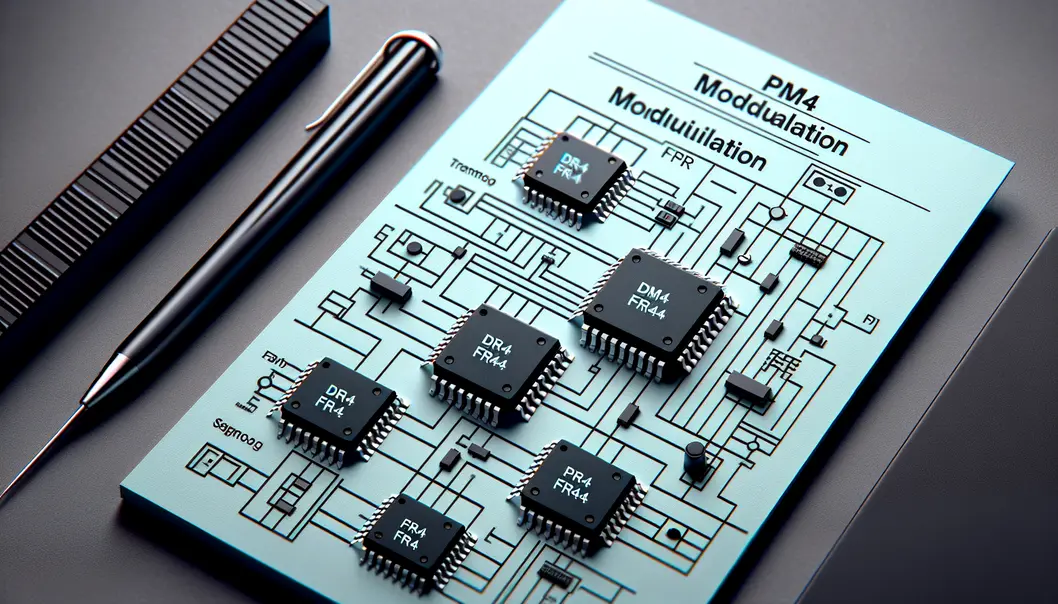
The most important shared trait across 400G DR4, FR4, and LR4 transceivers is that all three deliver 400 Gb/s with IM-DD PAM4 signaling rather than coherent optics. That common foundation matters because it defines their cost, latency, and deployment role. Each design sends 100 Gb/s per optical lane or wavelength, typically at 53.125 GBd PAM4, where two bits are carried per symbol. In practice, that creates a raw lane rate of 106.25 Gb/s before overhead, allowing four lanes to reach the 400G class while keeping module complexity below coherent alternatives.
Their differences begin with standards lineage and engineering intent. 400GBASE-DR4, introduced in IEEE 802.3bs, was built for short single-mode data center links. It emphasizes direct 4-lane parallel optics over reach. 400GBASE-FR4, later standardized in IEEE 802.3cu after early multi-source agreement momentum, targets a middle ground: longer reach with duplex fiber and wavelength multiplexing. 400GBASE-LR4-10, also in IEEE 802.3cu, extends the same 4-by-100G optical concept to 10 km, but only by tightening optical tolerances and increasing component performance. So while DR4, FR4, and LR4 all say “400G,” they represent three distinct design philosophies: shortest path and simplicity, balanced reach and cabling efficiency, and longest IM-DD reach with stricter optics.
The electrical side also reveals meaningful variation. Many modules expose either 400GAUI-8 or 400GAUI-4 host interfaces. That choice affects whether a module needs an internal gearbox or retimer to map electrical lanes to optical lanes. DR4 can align more naturally with parallel optical transmission, while FR4 and LR4 more often rely on internal conversion because four optical wavelengths must be managed on duplex fiber. This is one reason FR4 and LR4 usually draw more power and create more thermal load than DR4, even before reach-related penalties are considered. For a broader view of how these form-factor and interface choices influence higher-speed migration, see 400G QSFP-DD vs OSFP, including DR4, FR4, and LR4.
All three also depend on RS(544,514) KP4 FEC to make 100G-per-lane PAM4 practical. Without FEC, PAM4’s tighter eye openings would leave too little margin. KP4 adds roughly 5.8% overhead and tolerates pre-FEC bit error rates around 2.4×10^-4, while still enabling very low post-FEC error rates. The latency cost is small, usually tens of nanoseconds, but the reliability gain is essential. In effect, PAM4 supplies the density, and FEC supplies the usable link. That shared signaling framework is why the real comparison between DR4, FR4, and LR4 is not modulation itself, but how each standard applies it to very different optical paths.
How 400G DR4, FR4, and LR4 Split the Light: Optical Lanes, Wavelength Grids, and MPO vs LC Connectivity
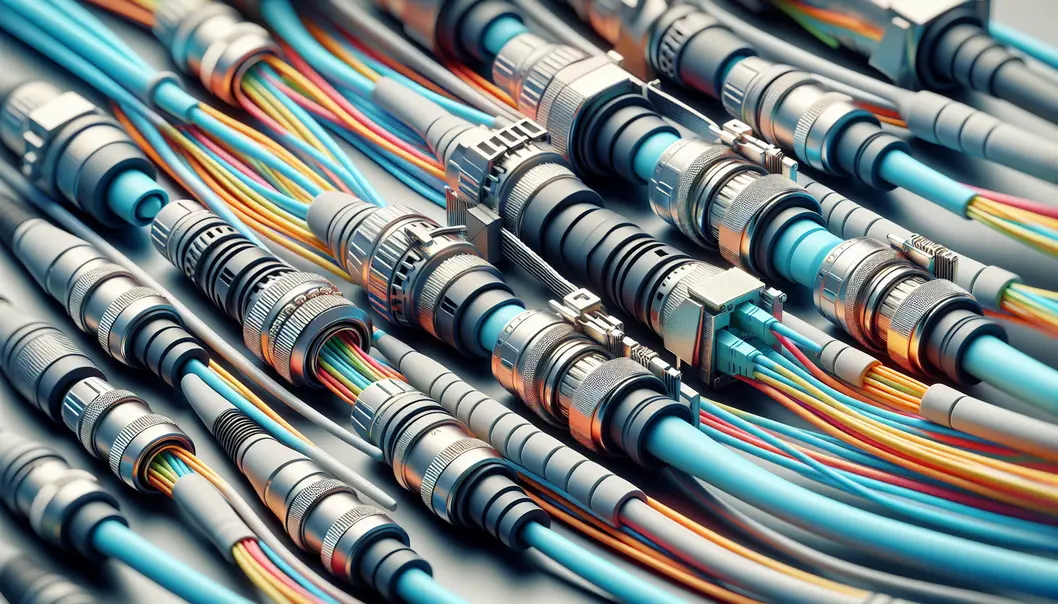
The clearest physical difference between 400G DR4, FR4, and LR4 transceivers is how they move 400 gigabits across fiber. DR4 does it with parallel optics. FR4 and LR4 do it with wavelength-division multiplexing. That single design choice changes the fiber count, connector style, patching model, and often the whole cabling strategy.
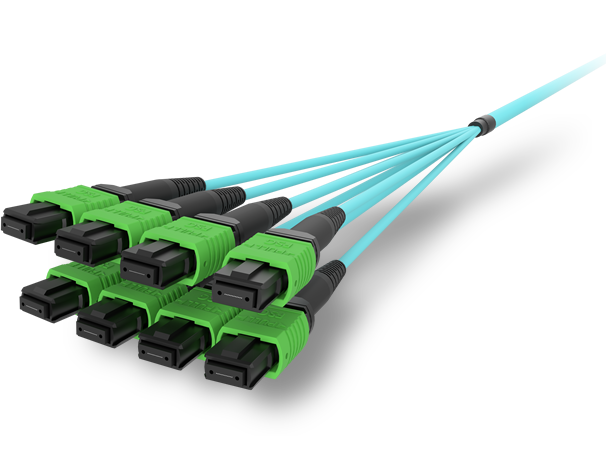
With DR4, the 400G signal is divided into four 100G optical lanes, and each lane travels on its own fiber. Transmission therefore needs eight active fibers in total: four for transmit and four for receive. This is why DR4 modules usually use an MPO-12/APC connector, even though only eight positions are active. The remaining positions are unused, but the MPO format gives the parallel lane layout that DR4 depends on. In practice, DR4 fits data center fabrics that already use structured MPO trunks, and it is especially attractive when 4x100G breakout is valuable. That breakout behavior is one reason DR4 often feels more native to leaf-spine architectures.
FR4 and LR4 take a different path. Instead of sending one lane per fiber, they place four optical wavelengths on a single fiber in each direction. Both therefore run over duplex single-mode fiber and typically use duplex LC/UPC connectors. Operationally, this is simpler for many teams. Duplex LC patching is familiar, easier to inspect, and often easier to scale outside dense MPO-based rows. If you need a practical refresher on parallel-fiber cabling, this guide to what MTP/MPO connectors are and why they matter in data center cabling provides useful context.
The wavelength plan is where FR4 and LR4 begin to separate. FR4 commonly uses a CWDM grid in the 1310 nm region, with nominal channels around 1271, 1291, 1311, and 1331 nm. That spacing supports 2 km operation while keeping the optics relatively practical. LR4, built for 10 km reach, uses a tighter wavelength plan, often described as LAN-WDM or tightly controlled CWDM-style channels. Narrower control over the wavelengths helps the module manage longer-distance penalties and stricter filtering requirements.
These connector and lane choices are not cosmetic. DR4 trades duplex simplicity for parallel-fiber density and breakout flexibility. FR4 and LR4 trade breakout friendliness for lower fiber count and simpler field patching. So when comparing DR4, FR4, and LR4, the connector on the faceplate reveals the architecture underneath: MPO usually means parallel 4-lane DR4, while LC usually means 4-wavelength FR4 or LR4.
How Reach and Link Budget Define the Real Difference Between 400G DR4, FR4, and LR4

The practical difference between 400G DR4, FR4, and LR4 transceivers becomes clearest when reach is translated into optical margin. On paper, the reach steps look simple: DR4 supports up to 500 m, FR4 extends to 2 km, and LR4 reaches 10 km. In operation, those numbers reflect very different assumptions about fiber loss, connector loss, wavelength handling, receiver sensitivity, and tolerance to impairments.
DR4 is optimized for short single-mode links where low chromatic dispersion in the O-band keeps 100G-per-lane PAM4 manageable. Its 500 m target sounds modest, but it is well matched to dense leaf-spine fabrics. The challenge is not usually fiber attenuation alone. It is insertion loss across MPO connections, patch fields, and polarity-controlled trunks. A few tenths of a decibel at each interface can consume margin quickly, which is why careful MPO design matters as much as module choice. This is also why many teams rely on detailed guidance for 400G/800G MPO/MTP loss budget and polarity planning.
FR4 changes the balance. Its 2 km reach is achieved not by adding more fibers, but by multiplexing four 100G wavelengths onto a duplex single-mode pair. That raises optical complexity and introduces mux and demux loss, yet it simplifies the cabling plant. The link budget must now absorb not only fiber attenuation and LC connector loss, but also wavelength filtering penalties and channel isolation limits. Even so, the O-band remains favorable because dispersion stays close to zero. That helps PAM4 survive 2 km without coherent processing.
LR4 pushes the same general 4-lambda idea much further. At 10 km, accumulated penalties become much harder to ignore. Fiber attenuation is still moderate in the 1310 nm region, but tighter optical specifications are required to preserve eye quality and receiver margin. This is why LR4 usually carries stricter wavelength control, stronger transmitter performance, and higher receive sensitivity expectations than FR4. The result is a larger usable budget, but also greater cost, power draw, and thermal sensitivity.
Across all three, performance is judged by more than nominal reach. Engineers look closely at TDECQ, OMA, RIN, extinction ratio, receiver sensitivity, and pre-FEC BER. All three formats depend on KP4 FEC to turn raw PAM4 error rates into reliable links, so a module that technically lights up a span may still fail operationally if pre-FEC margin is too thin. That is why reach is never just distance. In 400G optics, it is the sum of every loss, penalty, and tolerance the design can absorb before the link stops being dependable.
Choosing Between 400G DR4, FR4, and LR4 in Real Networks: Use Cases, Breakout Flexibility, Power Draw, and True Cost
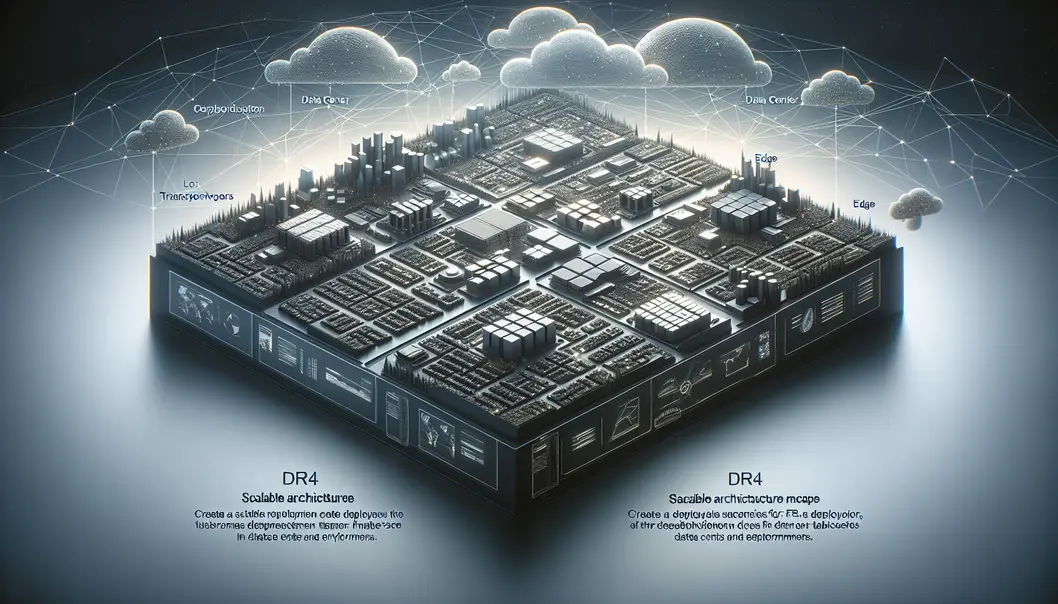
The practical difference between 400G DR4, FR4, and LR4 transceivers becomes clearest at deployment time, when cabling, port strategy, and operating cost matter as much as optical reach. DR4 is usually the natural fit for dense intra-data-center fabrics. Its parallel-fiber design aligns well with leaf-spine links under 500 meters, especially where operators already use MPO-based single-mode trunks. It also brings a major architectural advantage: straightforward 400G to 4×100G breakout. That makes DR4 attractive where a 400G switch port must aggregate multiple 100G endpoints without adding more expensive intermediate optics. In high-radix environments, that breakout option can lower effective port cost and simplify migration.
FR4 serves a different kind of network logic. When links stretch beyond typical hall distances but stay within about 2 kilometers, duplex LC cabling becomes highly appealing. FR4 avoids the operational overhead of parallel-fiber patching while still delivering 400G over standard single-mode pairs. It fits well in campus-style layouts, building aggregation, and data center zones where patch-field simplicity matters more than breakout flexibility. LR4 pushes the same duplex model much farther, up to 10 kilometers, making it the better choice for building-to-building backbones, large campus interconnects, and short metro-style spans where coherent optics would add unnecessary cost and power.
Those deployment patterns directly affect energy and thermal planning. In broad terms, power rises with optical complexity and reach. DR4 is usually the lowest-power option because it avoids internal wavelength multiplexing. FR4 consumes more because CWDM optics add mux and demux elements plus tighter laser control. LR4 generally sits highest, since 10-kilometer performance demands stricter optical tolerances and often more thermal management. That difference matters at scale. Across hundreds or thousands of links, a few watts per module becomes a real line item in rack power density, airflow design, and long-term energy spending. This is one reason form factor and faceplate thermals often influence the DR4 versus FR4 versus LR4 decision as much as raw distance.
Total cost of ownership follows a similar pattern, but not always in a simple way. DR4 optics are often the least expensive modules, yet the required MPO plant can add cost through trunks, cassettes, polarity management, and stricter cleaning discipline. Teams planning DR4 should also account for insertion loss and handling practices, especially in structured cabling layouts; this is closely related to 400G and 800G MPO/MTP loss budget and polarity guidance. FR4 usually costs more per optic, but its duplex LC cabling is easier to manage in the field. LR4 carries the highest module premium, yet for 2 to 10 kilometer links it can still be the lowest-cost practical option because it avoids moving to coherent transport too early.
How 400G DR4, FR4, and LR4 Fit into the Optical Ecosystem and the Roadmap to 800G/1.6T

The differences between 400G DR4, FR4, and LR4 transceivers do not stop at reach, connectors, or link budget. They also shape how operators manage supplier diversity, spare strategy, upgrade timing, and long-term cabling decisions. DR4 sits in the broadest and often most price-sensitive part of the 400G ecosystem because its optical design is comparatively simple. It avoids WDM filters and multiplexers, which lowers component count and opens the door to wider multi-vendor participation. FR4 and especially LR4 rely on tighter optical integration, more demanding laser performance, and stricter wavelength control. That usually narrows the supplier pool and makes qualification more rigorous.
Those ecosystem differences matter in large deployments. A network built around DR4 depends more heavily on MPO-based fiber infrastructure and on operational discipline around polarity, cleanliness, and cassette design. A network built around FR4 or LR4 leans on duplex LC simplicity, which many enterprise and campus teams already know well. This is why supply chain resilience is not just about module availability. It is also about whether the installed fiber plant, test tools, and field practices can support the chosen interface at scale. In practice, DR4 can be easier to source at volume, while FR4 and LR4 can be easier to absorb operationally where duplex single-mode cabling already dominates. For teams planning parallel-fiber environments, this guide to 400G/800G MPO/MTP loss budget and polarity is closely related to the migration issues that DR4-based designs raise.
The roadmap to 800G and 1.6T extends these tradeoffs rather than replacing them. Parallel optics remain attractive where density, short reach, and breakout flexibility matter most. That favors DR-style thinking as fabrics scale inside AI and cloud data halls. Duplex WDM optics continue to win where operators want fewer fibers, simpler patching, and longer reach on existing single-mode plants. That preserves the logic behind FR4 and LR4 even as lane rates climb from 100G to 200G per wavelength. In other words, the future does not make today’s 400G choices irrelevant. It makes them foundational.
A team that standardizes on DR4 is often optimizing for east-west scale and future high-radix upgrades. A team that prefers FR4 or LR4 is often protecting duplex cabling investments and smoother extension to larger campus footprints. As 800G and later 1.6T mature, the same core question remains: should the network spend complexity in the optics, or in the fiber plant? DR4, FR4, and LR4 are three different answers to that single architectural choice.
Final thoughts
Understanding 400G DR4, FR4, and LR4 transceivers allows network planners to optimize data center fabrics. DR4 simplifies short-reach, breakout-friendly designs, FR4 balances duplex simplicity and 2 km campus-scale links, while LR4 supports 10 km interconnects with tighter specs. Each solution offers unique benefits based on reach, cabling, power, and cost considerations. Your choice will shape today’s infrastructure and readiness for the 800G evolution.
Talk to ABPTEL about high-speed optics, MTP/MPO cabling, and data center interconnect solutions to optimize your network strategy.
Learn more: https://abptel.com/contact/
About us
ABPTEL provides high-speed optical transceivers, MTP/MPO cabling systems, DAC and AOC cables, PoE switches, FTTA solutions, and fiber tools for data center, AI, telecom, and network infrastructure projects.
Talk to ABPTEL
Looking for the right optical hardware for your AI data center, GPU cluster, or FTTA project? ABPTEL ships from Shenzhen with OEM/ODM support, fast lead times, and engineering-level pre-sales advice.
- 🔥 400G & 800G OSFP / QSFP-DD Transceivers — for AI training fabrics and hyperscale spine-leaf
- 📡 MPO / MTP High-Density Cabling — 12 / 24 / 32-fiber for high-density data centers
- ⚡ AOC & DAC Cables — short-reach GPU interconnects, OEM compatible
- 🧩 SFP / SFP+ / SFP28 / QSFP28 Modules — 1G to 100G optical transceivers
- 📋 Data Center Cabling Solutions — end-to-end design guide
- ❓ Read our FAQ — compatibility, polarity, lead time, MOQ
💬 Get a quote in 12 hours: Contact Candy · WhatsApp +86 188 1445 5697 · candy@abptel.com