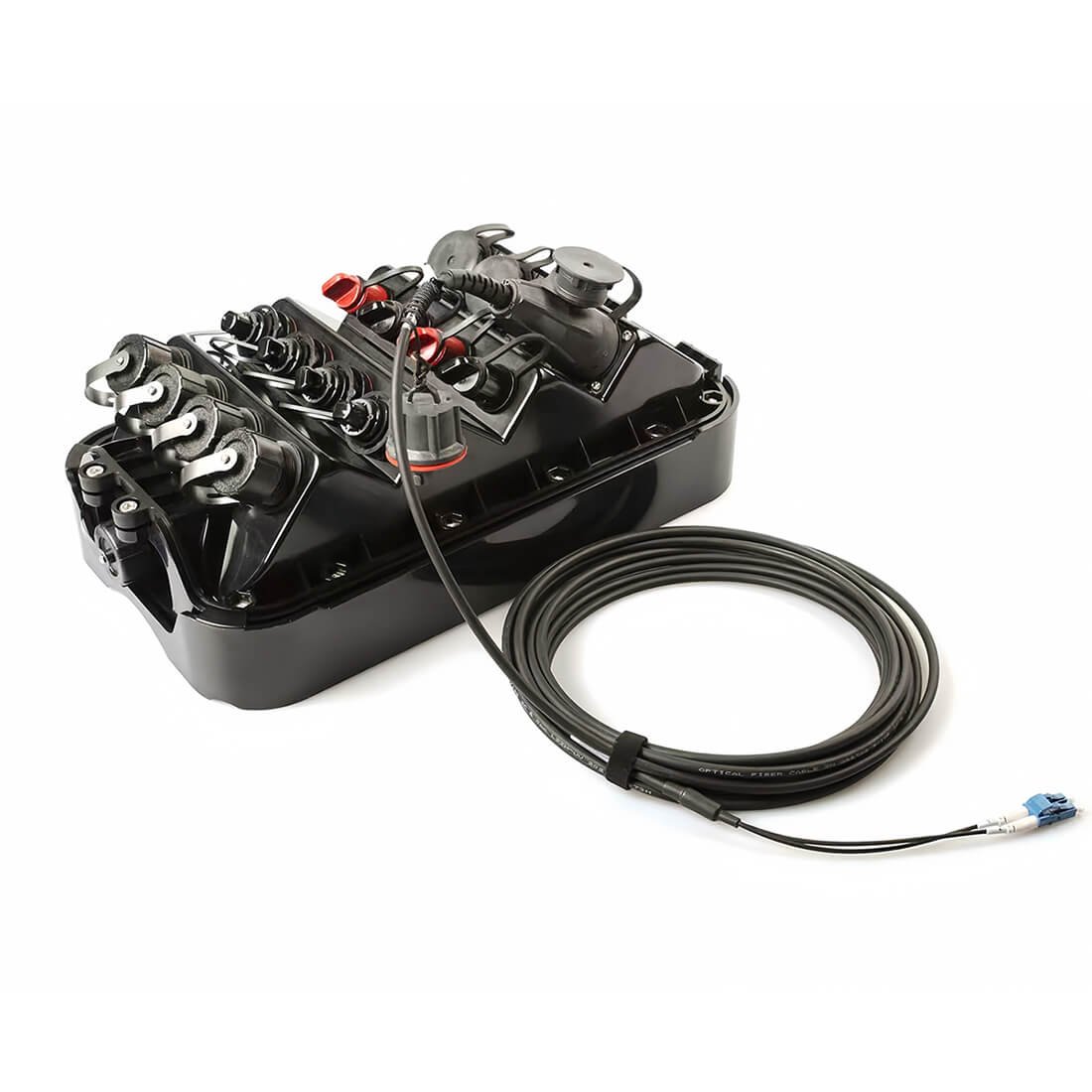
Description
Plug-and-play last-mile terminal for FTTH & 5G small cells
Hardened SC/APC interfaces (OptiTap® compatible) — no field splicing
IP68 sealed housing, OS2 single-mode (G657A1), -40°C to +85°C
Overview
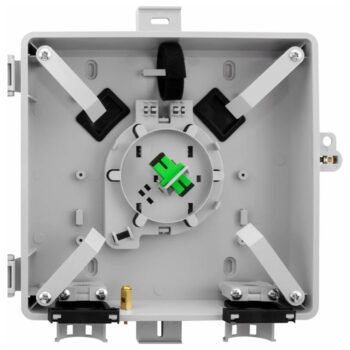
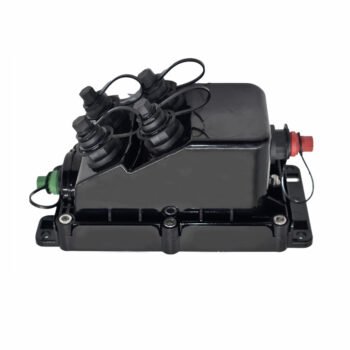
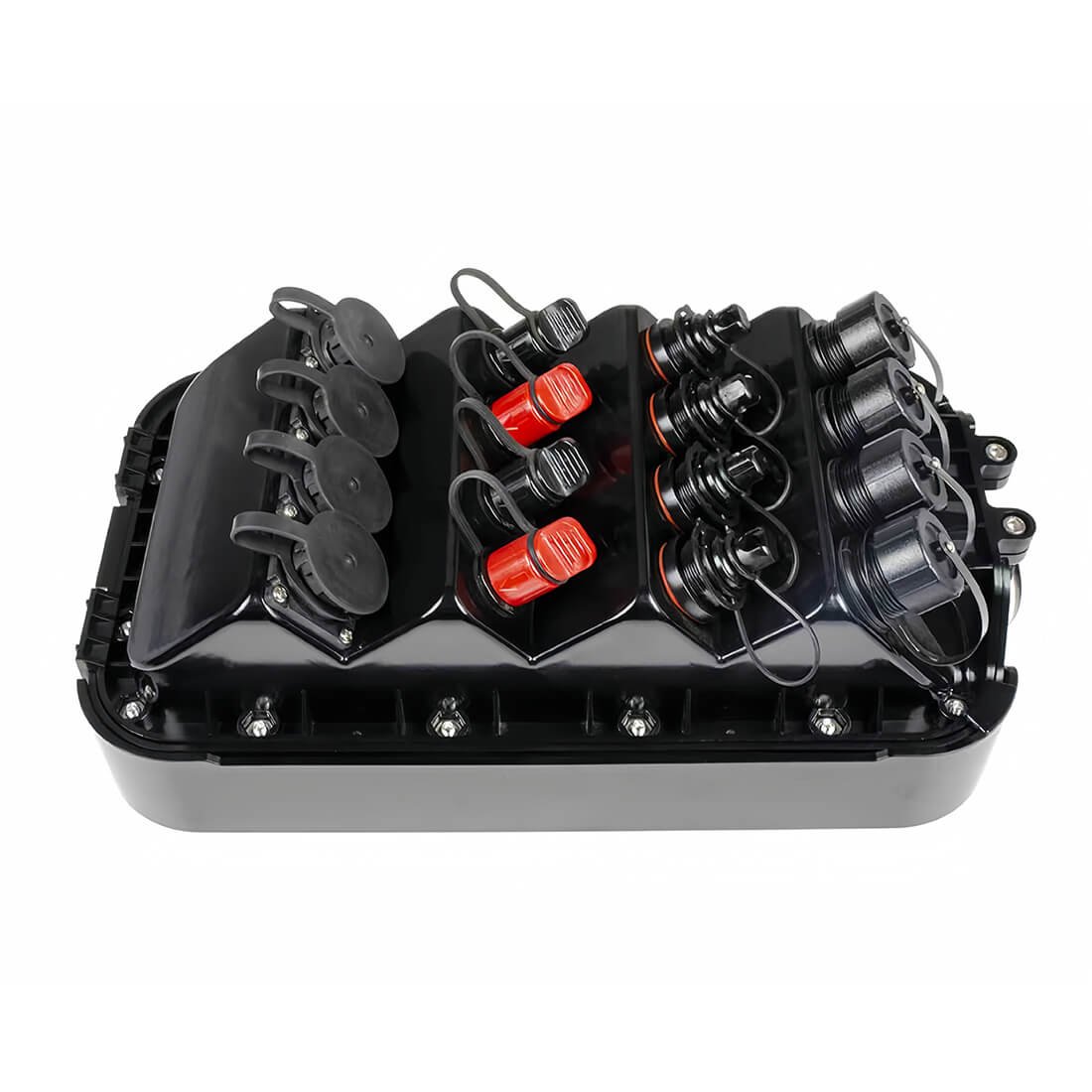
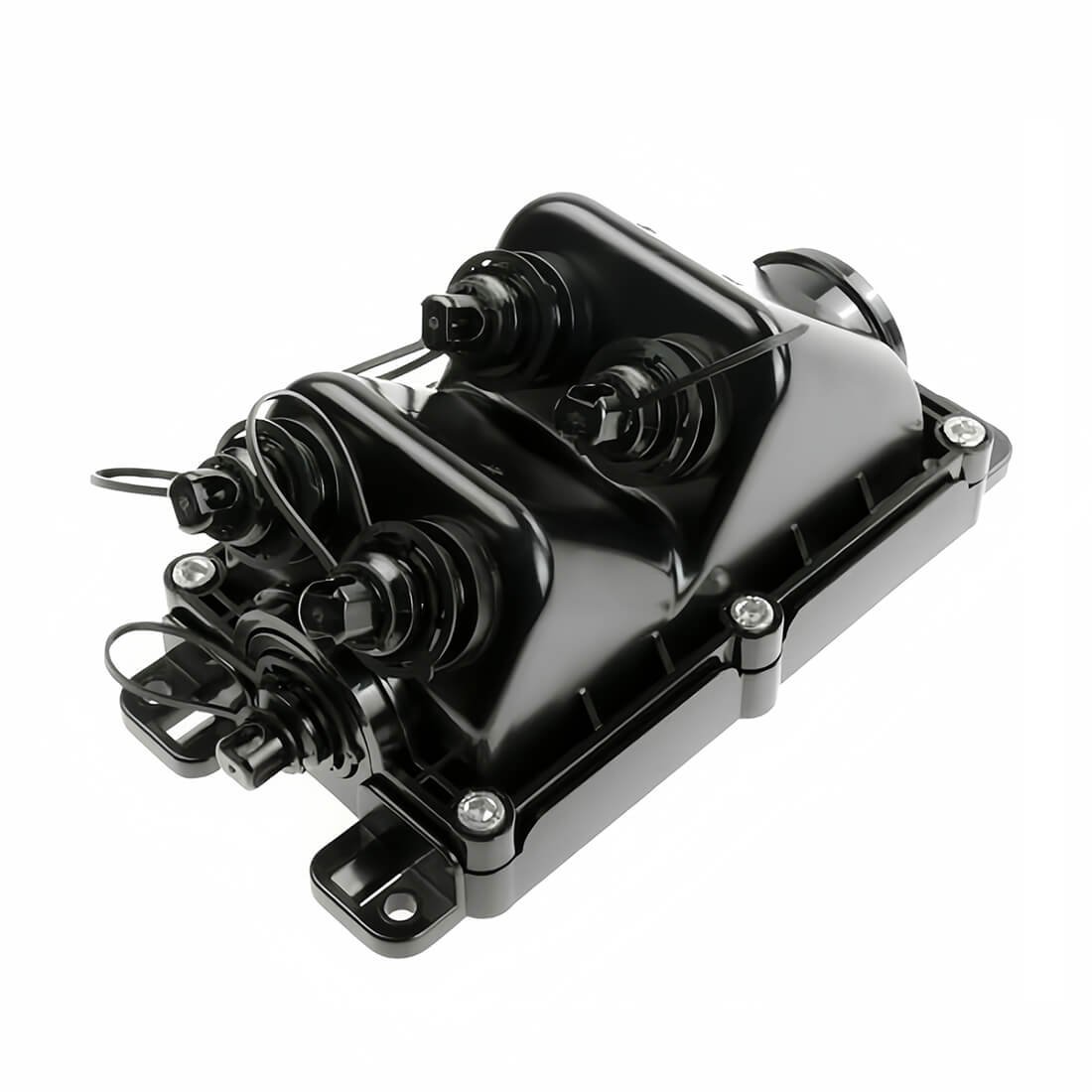
The ABPTEL IP68 Hardened MST (Multi-Service Terminal) is a fully sealed outdoor drop terminal designed for fast “last-mile” deployment in FTTH networks and street-level 5G small cells. With hardened SC/APC adapter ports (OptiTap® compatible), installers can connect hardened drop cables in seconds—without opening the enclosure or splicing in the field. Standard fiber is OS2 single-mode G657A1 for tighter bend performance in compact routing. Port counts typically include 4/8/12 (other counts available by request), and mounting supports pole, wall, aerial strand, hand-hole, pedestal, and cabinet scenarios.
Key Technical Features
- Ingress Protection: IP68 (dust-tight + water immersion protection)
- Port Capacity: 4 / 8 / 12 ports (2/4/6/8/12 optional by model)
- Adapter Interface: Hardened SC/APC (OptiTap® compatible)
- Default Fiber: OS2 single-mode, G657A1
- Field Connection: Plug-and-play hardened drops; no field splicing for subscribers
- Operating Temperature: -40°C to +85°C
- Mounting: Pole / Wall / Strand (aerial) / Hand-hole / Pedestal
- OEM/ODM: Labeling, port count, cable entry, tail type, and packaging customization
Configuration Options
Option A — Stubbed Tail Input
- Pre-installed feeder tail cable (typical lengths: 50 m / 100 m / custom)
- Best for splicing the feeder tail into a nearby closure or cabinet
Option B — Connectorized Input
- Input can be customized with a hardened adapter interface for daisy-chain / modular builds
- Useful when the upstream architecture is fully connectorized
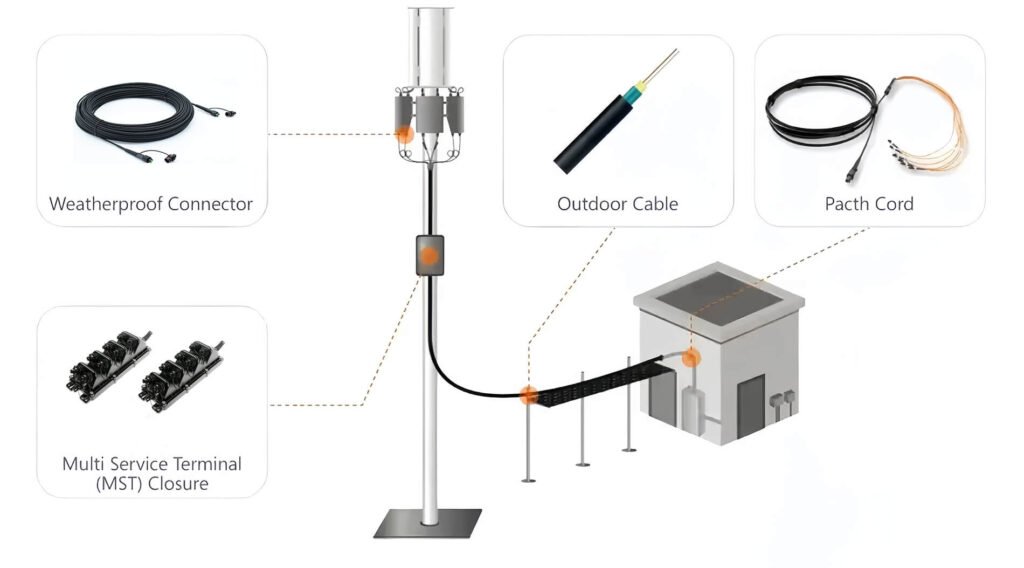
Structure & What’s Inside (What engineers care about)
- Sealed IP68 housing for long-term outdoor exposure (rain, dust, splash, temporary immersion)
- Hardened interface protects the ferrule area during mating/unmating and reduces contamination risk
- Cable routing & strain relief engineered for repeated handling on poles/walls and in hand-holes
- Compact multi-port layout for block-level drops in dense neighborhoods
Compatibility
- Drop Interface: Hardened SC/APC drop cables with OptiTap®-style mating (OptiTap® compatible)
- Network Use Cases: FTTH last-mile drops, MDU drops, street-level small cells, rural broadband aerial deployments
- Typical Pairing: Ruggedized outdoor patch cords (ODVA / FullAXS / PDLC / OPT series depending on the upstream equipment)
Note: OptiTap® is a trademark of Corning. ABPTEL provides OptiTap-compatible hardened interfaces for connectorized access networks.
FAQ (8–12)
1) What is an MST box used for?
An MST (Multi-Service Terminal) is a sealed outdoor terminal used to connect feeder fiber to multiple hardened subscriber drop cables—commonly on poles, walls, or aerial strand lines in FTTH deployments.
2) Why choose hardened SC/APC interfaces?
Hardened interfaces protect the connector and sealing area in outdoor conditions, reduce contamination risk, and enable quick plug-in drops without opening the enclosure.
3) Is this compatible with OptiTap® drop cables?
Yes—this MST uses OptiTap®-compatible hardened SC/APC interfaces for connectorized access networks.
4) What are the common port counts?
Most projects use 4/8/12 ports. Other port counts (2/4/6/8/12) can be supported depending on the model.
5) What fiber type do you supply by default?
Default is OS2 single-mode, G657A1, which is preferred for tighter bend routing in compact outdoor installations.
6) What is the difference between stubbed tail and connectorized input?
Stubbed tail is best when you splice the feeder into a closure/cabinet. Connectorized input is ideal for fully connectorized architectures or daisy-chain designs.
7) Can the box be mounted in hand-holes or pedestals?
Yes. It supports pole, wall, aerial strand, hand-hole, pedestal, and cabinet installation scenarios.
8) What is the operating temperature range?
Typical operating range is -40°C to +85°C, suitable for most outdoor telecom environments.
9) Do you provide test reports?
Yes—available options include insertion loss records, visual inspection, and outgoing QC reports by batch.
10) Can you do OEM branding and labeling?
Yes. We support OEM label, laser marking, packaging, and documentation customization for projects and distribution channels.
RFQ Checklist
Copy/paste and fill:
- Port count: 4 / 8 / 12 (or other: _)
- Adapter interface: Hardened SC/APC (OptiTap compatible) / other: _
- Fiber type: OS2 G657A1 (default) / G652D / other: _
- Input type: Stubbed tail / Connectorized input
- Stubbed tail length (if stubbed): _ m
- Drop cable type to mate: OptiTap-style hardened drops / other: _
- Mounting: Pole / Wall / Strand / Hand-hole / Pedestal
- Operating environment: temperature range _ / UV exposure / coastal corrosion __
- Labeling: ABPTEL / OEM brand / blank
- Quantity & delivery: _ pcs, target lead time _
- Documents required: Datasheet / drawing / test report / RoHS / REACH / other: _