SFP+ vs SFP28: How Should I Choose?
I see teams stuck between 10G and 25G. Projects slip while people debate specs, cost, and timelines. The risk is buying the wrong speed and living with it for years. I break the choice into distance, density, power, and roadmap so you can move.
Pick SFP+ when your links are ≤10G, distances are short-to-medium, budgets are tight, or older switches dominate. Pick SFP28 when you need 25G per lane, higher rack density, lower watts per G, or a clean upgrade path to 100/200/400G. Match optics to fiber type and vendor lists.
I am Candy from ABPTEL in Shenzhen. I run B2B builds with operators and data centers. I have seen 10G serve well for years, and I have seen 25G erase bottlenecks in one weekend. Below is how I frame the decision with engineers, buyers, and PMs before we lock POs.
What is SFP+, and when is it still the right call?
SFP+ is the 10G workhorse. It is the small form-factor successor to early 10G modules. It follows the SFF-84311 electrical spec and supports 10 Gigabit Ethernet2, 8G Fibre Channel, and OTU2. It is compact, cost-effective, and everywhere in access, aggregation, and server NICs.
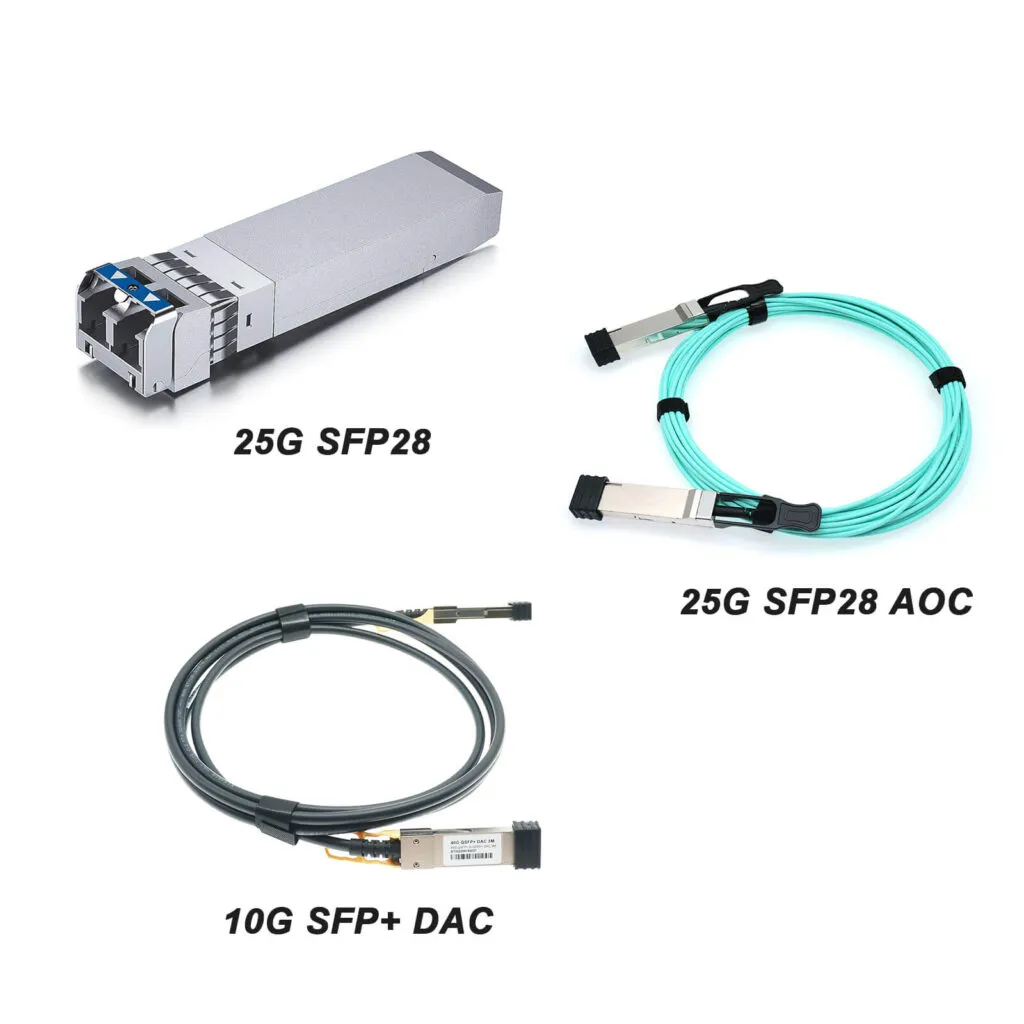
Use SFP+ when links stay at 10G, fiber is already in place, and your switches are 10G-centric. It has broad vendor support, low price, and many SKUs (SR, LR, ER, ZR, BiDi, CWDM/DWDM, DAC, AOC). It is smaller than older XENPAK/XFP3 and remains the dominant 10G option.
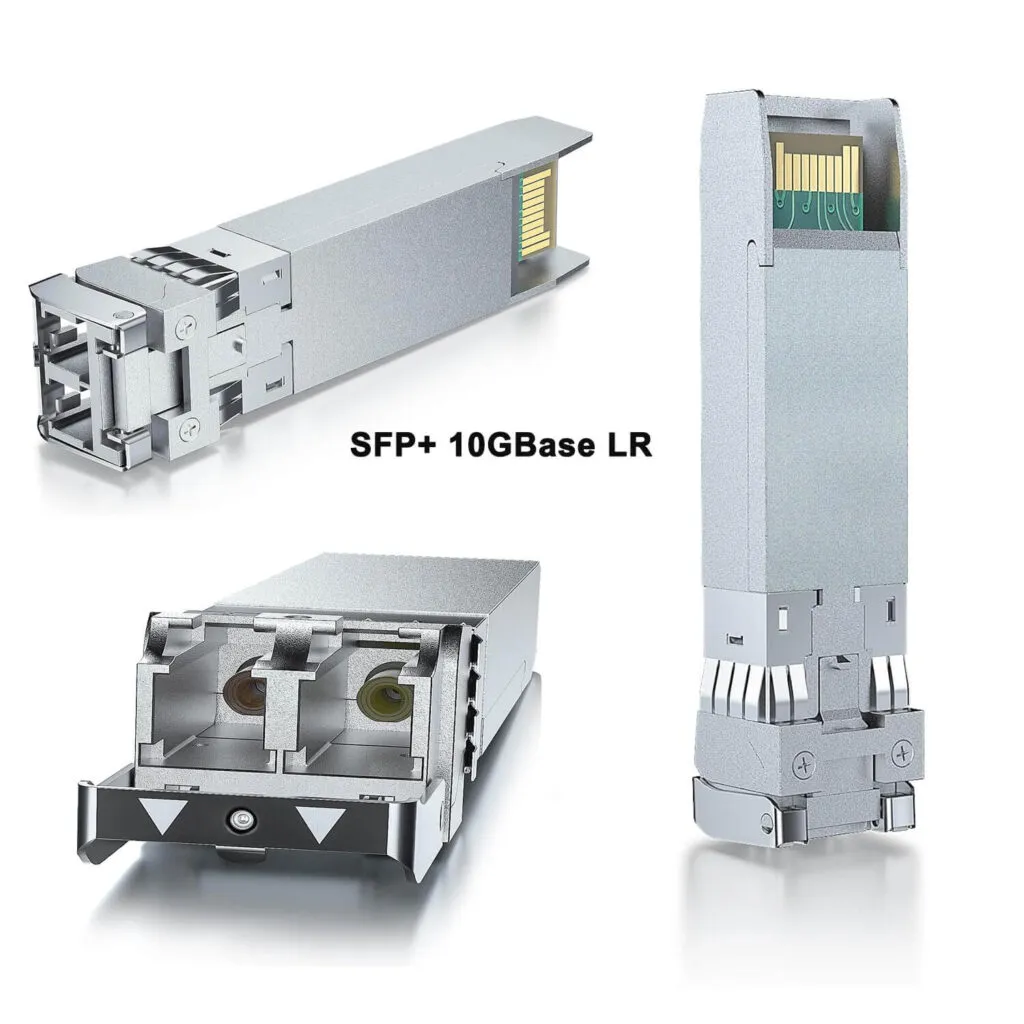
Common SFP+ link types
| Link type | Fiber/Copper | Typical reach | Notes |
|---|---|---|---|
| 10GBASE-SR (SFP+ SR4) | MMF OM3/OM4 | 300–400 m | Low cost in-building |
| 10GBASE-LR (SFP+ LR) | SMF | 10 km | Metro/access staple |
| 10G DAC (Twinax) | Copper | 1–7 m | TOR to server, very low power |
| 10G AOC | Active fiber | 3–30 m+ | Clean cabling, EMI immune |
Where SFP+ still wins
- Broad second-hand and spare stock.
- Simple monitoring and automation; many teams know it well.
- Lowest cost per port when the demand is 10G.
SFP+ pitfalls to watch
- Hidden oversubscription at leaf-spine when east-west traffic grows.
- Fan and power rise if you scale port count instead of speed.
- Future 25G/100G migrations may require new line cards or switches.
What is SFP28, and when do I need 25G?
SFP28 keeps the same compact shell as SFP+, but each lane runs at 25G. It is the standard optic for 25 Gigabit Ethernet5 server NICs and 32G Fibre Channel. It pairs well with 100G leaf-spine because four lanes of 25G aggregate cleanly to 100G uplinks via CAUI-4 lane mapping6.
Choose SFP28 when servers push >10G, storage needs 25G, or you plan a 100G spine. It offers higher port density, lower watts per G, and better long-term cost than stacking more 10G. It supports SR, LR, BiDi, CWDM, DAC, and AOC with broad vendor adoption.
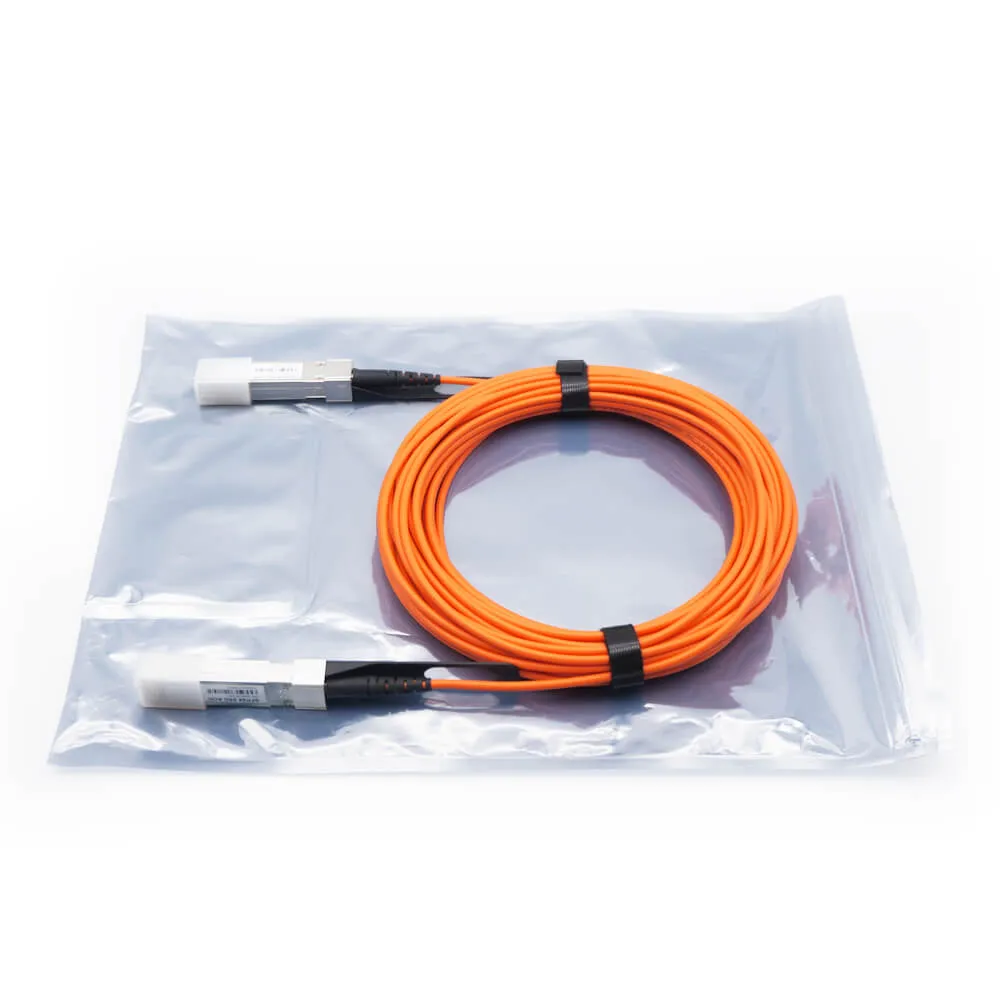
SFP28 portfolio at a glance
| Link type | Fiber/Copper | Typical reach | FEC/Notes |
|---|---|---|---|
| 25GBASE-SR (SFP28 SR) | MMF OM3/OM4/OM5 | 70–150 m | Check host FEC7 on long MMF |
| 25GBASE-LR (SFP28 LR) | SMF | 10 km | Common in leaf-aggregation |
| 25G DAC (SFP28) | Copper | 1–5 m | Very low latency and power |
| 25G AOC | Active fiber | 3–30 m+ | Clean pathways in dense racks |
Why 25G scales better
- 25G per lane maps to 100/200/400G fabrics.
- Fewer ports to cable for the same throughput.
- Watts/Gbps often drops 30–50% vs 10G at scale.
Can I mix SFP+ and SFP28 in the same switches and links?
Many teams want to drop 10G servers into a new 25G leaf, or run 25G in racks while core stays at 10G. The cage and latch look the same, but there are speed, FEC, and vendor list details that decide if it works cleanly.
A 25G port can often accept an SFP+ module and run at 10G; the reverse is not supported. Always confirm SFP28 backward compatibility8 and DAC/AOC EEPROM rules in the switch vendor list.
Compatibility matrix (typical behavior)
| Host port | Plugged module | Expected result | Caveats |
|---|---|---|---|
| 25G SFP28 port | SFP+ 10G optic/DAC | Runs at 10G | Set speed; vendor whitelist |
| 10G SFP+ port | SFP28 25G optic/DAC | Not supported | Port cannot clock 25G |
| 25G SFP28 port | SFP28 25G optic | Runs at 25G | FEC may be required |
| 25G SFP28 port | AOC/DAC mix | Varies | Check cable code/length caps |
Practical mixing tips
- Lock port speed explicitly when downshifting to 10G.
- Keep FEC settings aligned across both ends.
- Use vendor-approved part numbers for optics and DAC/AOC.
- Test BiDi and CWDM parts in a pilot rack before rollout.
Field note
I once merged a 10G SFP+ rack into a new 25G leaf for a finance client. We down-sped the ports, pinned FEC off, and used approved 10G DACs. Cutover finished in one night, then we upgraded rows to 25G over the next quarter with zero rewiring.
Which one fits my distance, cabling, power, and budget needs?
The best choice matches link length, media you have, watts, and how fast the team must scale. A short copper run in a TOR rack is not the same as a building riser. A campus aggregation is not the same as a spine.
If most links are ≤3 m, DAC vs AOC9 tradeoffs matter: pick 10G SFP+ DAC or 25G SFP28 DAC by speed need. For 50–150 m inside buildings, MMF SR works; go 25G if you plan for growth. For ≥1 km, pick LR on SMF; favor 25G where you see traffic growth and spine upgrades.
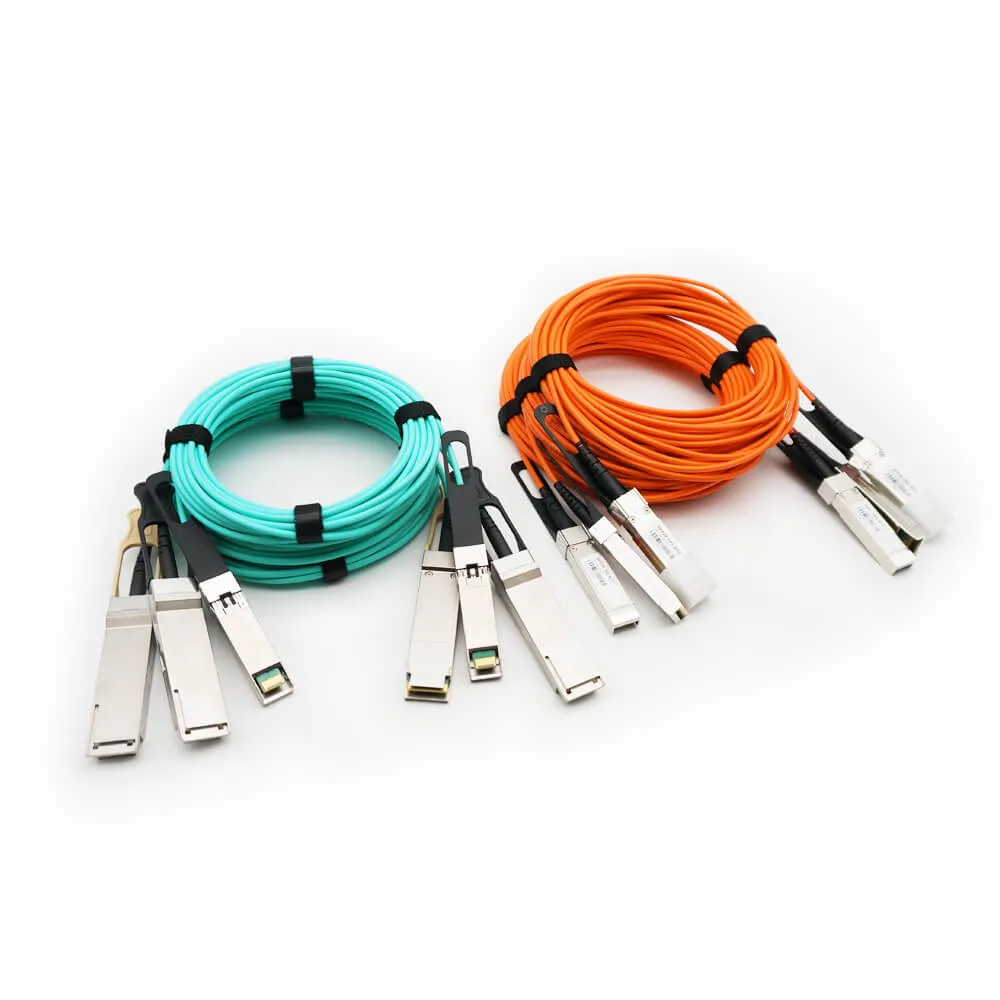
Distance and media selector
| Scenario | Media you have | SFP+ option | SFP28 option | My note |
|---|---|---|---|---|
| TOR to server ≤3 m | No fiber | 10G DAC | 25G DAC | Lowest cost/latency |
| TOR to server 3–20 m | No fiber | 10G AOC | 25G AOC | Clean cable mgmt |
| In-row 50–150 m | OM3/OM4 | 10G SR | 25G SR | Check FEC on 25G SR |
| Riser/campus 1–10 km | SMF | 10G LR | 25G LR | Budget for spares |
| Leaf–Spine 100–300 m | OM4/OM5 | 10G SR (rare) | 25G SR | 25G aligns to 100G uplinks |
Power and thermal (typical)
| Module type | Typical power | Note |
|---|---|---|
| SFP+ SR/LR | ~0.6–1.0 W | Lowest heat at 10G |
| SFP28 SR/LR | ~1.0–1.5 W | More G per watt |
| 10G DAC | ~0.1–0.3 W | Host-only power |
| 25G DAC | ~0.2–0.5 W | Slightly higher, still low |
Budget and lifecycle
| Factor | SFP+ (10G) | SFP28 (25G) |
|---|---|---|
| Module unit price | Lower | Higher per unit, lower per G |
| Switch/line card cost | Lower | Higher, but fewer ports needed |
| Cabling density | Lower | Higher density per RU |
| 3-year TCO at scale | Can rise with port count | Often lower per Gbps |
Quick chooser (by role)
| Role | Ask yourself | Likely pick |
|---|---|---|
| Procurement | Is budget tight and demand stable at 10G? | SFP+ |
| Network PM | Do I need headroom without rewiring later? | SFP28 |
| Engineer | Will 100G/400G uplinks land this year? | SFP28 |
| Ops | Do we have large 10G installed base and spares? | SFP+ (now), plan SFP28 pilot |
Conclusion
The safe choice is not one speed for all. If traffic is steady and 10G fits, SFP+ saves money right now. If growth is real, SFP28 avoids a second build and maps cleanly to 100G fabrics. I advise teams to inventory media, model power, check vendor lists, and pilot both in one rack before they buy at scale. When you are ready, I can help validate optics (SR/LR/BiDi), DAC/AOC lengths, and switch compatibility for your exact BOM.
The official SFF-8431 document defines the electrical requirements for SFP+, so you can verify compliance details and signal integrity rules. ↩
The IEEE 802.3ae standard is the primary reference for 10GbE; it confirms naming, PHYs, and reach expectations for planning. ↩
A historical overview of legacy 10G form factors shows why SFP+ displaced XENPAK/XFP in size and power. ↩
A vendor-neutral brief on 10GBASE-SR reach over OM3/OM4 confirms typical 300–400 m distances used in designs. ↩
The IEEE 802.3by standard defines 25GbE; it helps validate host/optic capabilities and media limits before purchasing. ↩
A reference on CAUI-4 explains how four 25G lanes aggregate to 100G, which informs fabric planning. ↩
A technical note on RS-FEC for 25G helps you decide when host FEC is needed for longer MMF runs. ↩
Vendor guidance on running SFP+ modules in SFP28 ports at 10G clarifies supported modes and caveats. ↩
A concise comparison of DAC and AOC explains when to choose each for cost, latency, EMI, and cable management. ↩
Talk to ABPTEL
Looking for the right optical hardware for your AI data center, GPU cluster, or FTTA project? ABPTEL ships from Shenzhen with OEM/ODM support, fast lead times, and engineering-level pre-sales advice.
- 🔥 400G & 800G OSFP / QSFP-DD Transceivers — for AI training fabrics and hyperscale spine-leaf
- 📡 MPO / MTP High-Density Cabling — 12 / 24 / 32-fiber for high-density data centers
- ⚡ AOC & DAC Cables — short-reach GPU interconnects, OEM compatible
- 🧩 SFP / SFP+ / SFP28 / QSFP28 Modules — 1G to 100G optical transceivers
- 📋 Data Center Cabling Solutions — end-to-end design guide
- ❓ Read our FAQ — compatibility, polarity, lead time, MOQ
💬 Get a quote in 12 hours: Contact Candy · WhatsApp +86 188 1445 5697 · candy@abptel.com