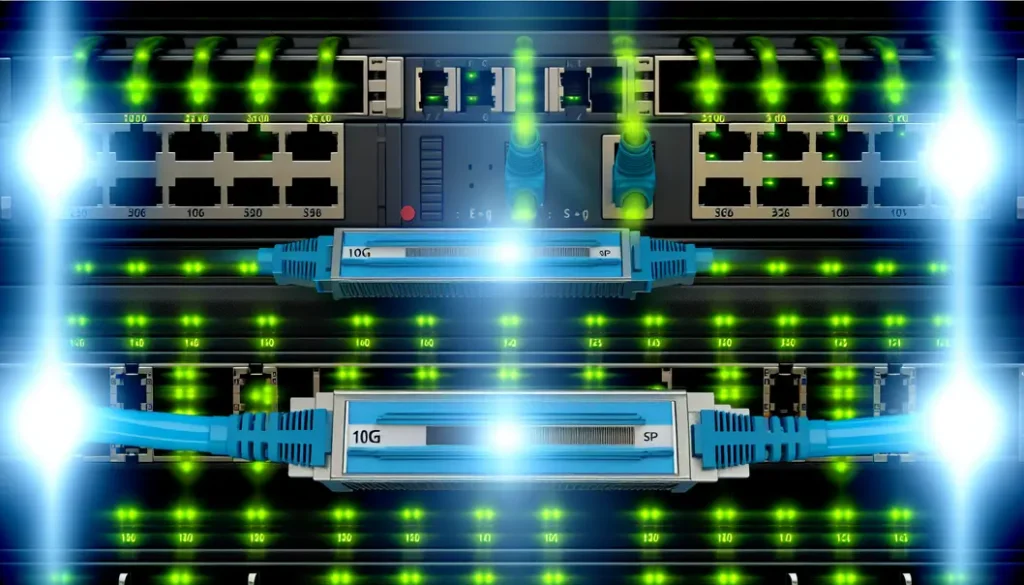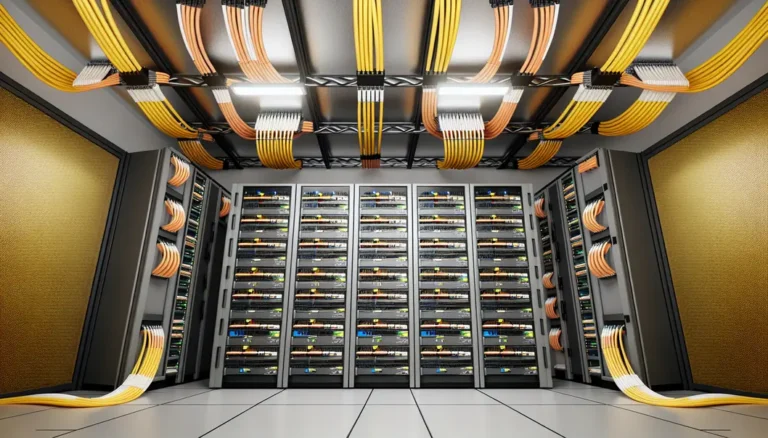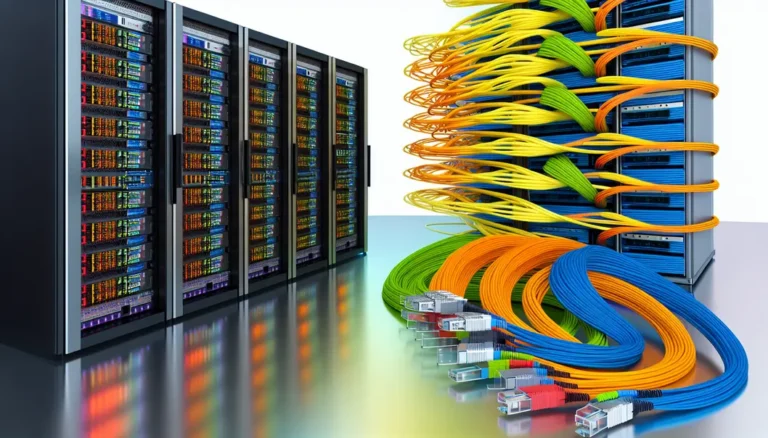
Enterprise data centers are under increasing pressure to support higher bandwidth demands, driven by the rise of AI workloads, cloud computing, and next-gen applications. Two prominent optical transceiver options—10G SFP+ and 25G SFP28—are essential considerations for modern network architects and infrastructure planners. While 10G is a well-established standard, 25G offers higher efficiency and future scalability. This article delves into the nuances of when to use each standard, considering cost, design, and performance. To help you make an informed decision, this guide explores total cost of ownership (TCO), network architecture optimizations, cabling compatibility, and future-proofing strategies. By connecting every aspect to practical data center scenarios, you’ll gain actionable insights into which option aligns with your enterprise’s goals.
Balancing Port Cost, Upgrade Timing, and Total Ownership in 25G SFP28 vs 10G SFP+ Data Center Decisions

Choosing between 25G SFP28 and 10G SFP+ is rarely about transceiver price alone. The stronger business case usually appears when teams compare the full life of a port, not the cost of the optics in isolation. A 10G path often looks cheaper at purchase time, especially when an enterprise already owns compatible switches, installed links, and operational spares. If the workload is stable, east-west traffic is modest, and server access links are unlikely to be refreshed soon, extending 10G can be the most sensible financial decision. It preserves capital, avoids premature replacement, and reduces the disruption that comes with broader infrastructure change.
The TCO picture shifts when density and growth matter more than day-one savings. A 25G access layer can deliver far more bandwidth per server port while using a similar physical form factor. That matters because the real expense in a data center is often tied to switch ports, rack space, power, cooling, and future migration effort. If a workload would need multiple 10G links to reach the same practical throughput target, 25G can lower the cost per delivered gigabit and simplify operations at the same time. Fewer links mean fewer ports to license, fewer cables to manage, and fewer failure points to troubleshoot. Over several refresh cycles, those indirect savings can outweigh a higher initial component price.
Cabling also affects long-term economics. If existing short-reach copper or fiber runs can be reused, 10G may remain attractive for another lifecycle. But if the environment is already being recabled, or if switch and server generations are both due for replacement, that is often the cleanest moment to move to 25G. Upgrading in phases can be more expensive than aligning changes into one planned refresh. Enterprises that expect downstream movement toward 100G uplinks should weigh how 25G access better fits modern speed ladders. That broader migration logic is explored in this overview of 100G data center upgrades.
Power and operational efficiency also belong in the cost model. A design that reaches capacity with fewer interfaces can reduce aggregate power draw and simplify inventory. Training, sparing, and compatibility testing become easier when the network standard is closer to the organization’s next target state rather than its last one. Still, 10G remains financially sound for lightly loaded racks, management networks, legacy application zones, and environments where depreciation schedules favor extending existing assets. The best choice, then, is not the fastest option or the cheapest port. It is the option that minimizes total spend across bandwidth demand, refresh timing, and the cost of the next migration the enterprise already knows is coming.
Designing Leaf-Spine Capacity: When 25G SFP28 or 10G SFP+ Makes Sense in Enterprise Data Center Architecture

Network architecture often decides the 25G versus 10G choice more clearly than raw port speed alone. The real question is how each server-facing link fits into oversubscription targets, east-west traffic patterns, and future uplink scaling. In many enterprise data centers, 10G remains adequate when applications are lightly distributed, storage traffic is modest, and server utilization rarely pushes sustained throughput. If racks host general business systems, small virtualization clusters, or workloads with limited lateral traffic, 10G can still align well with a conservative leaf-spine design.
The balance changes when server density rises or traffic becomes more parallel. Hyperconverged infrastructure, large virtual machine clusters, container platforms, backup windows, and storage replication all increase east-west demand. In these designs, 25G is often the cleaner architectural fit because it raises host bandwidth without forcing a large jump in port count. A leaf switch can support more aggregate server throughput before uplinks become the choke point. That matters because oversubscription is not just a mathematical ratio. It is a risk decision. A design that looks acceptable on paper can still create burst congestion, queue growth, and uneven application performance.
For that reason, 25G is often preferred when architects want to keep oversubscription moderate while preserving a simple two-tier leaf-spine model. It pairs naturally with higher-speed uplinks and gives more room for growth as rack bandwidth expands. If a rack of servers can realistically generate traffic above what 10G access links were designed for, staying at 10G often shifts pressure upward into the aggregation layer. The result may be avoidable contention, especially during synchronized events such as data rebalancing, cluster recovery, or large analytics jobs.
By contrast, 10G still makes architectural sense where uplink budgets are tight, application peaks are predictable, and the environment values stability over headroom. It can also be suitable in mixed-speed deployments, where older racks remain at 10G while newer compute pods move to 25G. That staged approach helps contain disruption while aligning bandwidth with workload classes instead of applying a blanket upgrade.
Another advantage of 25G is that it improves per-lane efficiency in migration planning. It fits more naturally into modern switch silicon and higher-speed breakout strategies, which can simplify future transitions toward denser fabrics. Teams comparing interface generations may also find this overview of SFP, SFP+, SFP28, and QSFP28 form factors useful for understanding how access speeds relate to broader fabric evolution.
In practice, the best architectural decision comes from mapping workload behavior to acceptable oversubscription. Use 10G where demand is steady and bounded. Use 25G where rack bandwidth growth, east-west intensity, and fabric longevity matter more than maintaining legacy access speeds.
Choosing the Right Fiber Path: Cabling, Optics, and Compatibility in 25G SFP28 vs 10G SFP+ Data Center Deployments
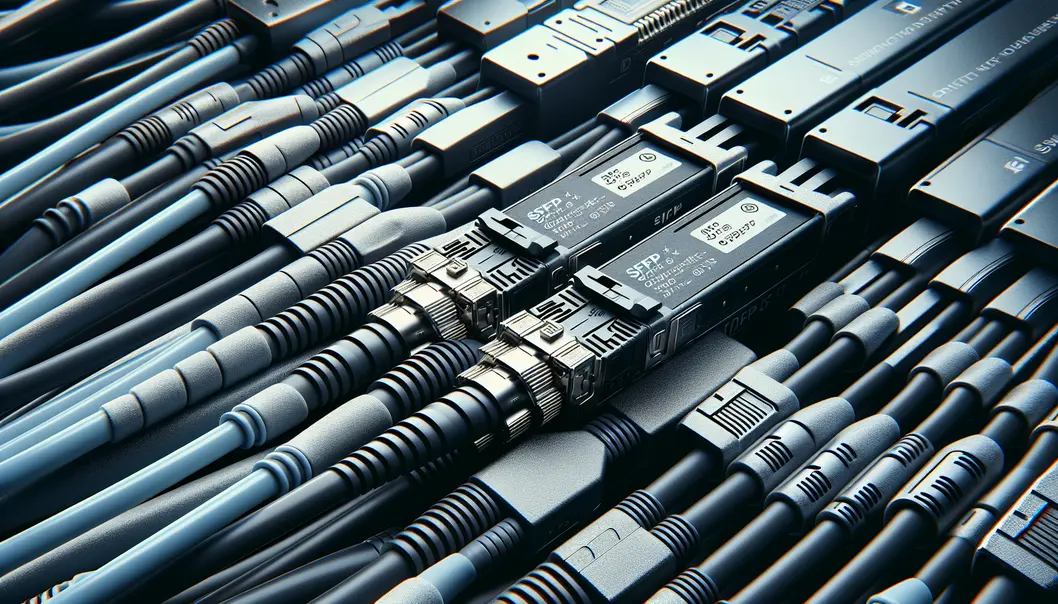
The cabling and optics layer often decides whether a move from 10G SFP+ to 25G SFP28 is simple or unexpectedly expensive. On paper, both options can use familiar connector styles and similar switch port densities. In practice, the choice depends on how much of the existing plant can stay in service, how far links must run, and how strict the environment is about interoperability.
A key advantage of 25G is that it usually delivers more bandwidth without requiring four-lane breakout designs at the server edge. That makes migration cleaner than older 40G approaches. Yet the physical path still matters. Many enterprise data centers can reuse existing single-mode fiber for either 10G or 25G, provided loss budgets are within spec and connector quality is good. Short-reach multimode links are more sensitive to the exact optic type, the installed fiber grade, and total channel condition. A legacy multimode plant that handled 10G reliably may not always be the best foundation for a broad 25G rollout, especially where patching is dense or documentation is weak.
Direct attach copper can simplify very short server-to-switch links for both speeds. However, 25G places tighter signal integrity demands on passive copper reach. That means a layout built around long copper runs at 10G may need either shorter DACs or a shift to active copper or fiber when moving to 25G. In top-of-rack designs, this is often manageable. In end-of-row layouts, it can become a real planning constraint.
Compatibility is where many deployment plans succeed or stall. SFP28 and SFP+ ports are related, but they are not universally interchangeable in every direction or every platform. Some switches support 10G operation in 25G ports, while others require explicit software support, approved transceivers, or port group configuration changes. Auto-negotiation behavior can also differ by network interface, switch silicon, and breakout design. This is why optical selection cannot be separated from platform validation. Before standardizing on 25G, confirm port modes, firmware behavior, forward error correction requirements, and supported cable assemblies across the entire path. A useful primer on form-factor differences is this guide to SFP vs SFP+ vs SFP28 vs QSFP28.
The practical rule is simple. Choose 10G SFP+ when preserving older multimode cabling, existing optics inventory, and broad compatibility is more valuable than added headroom. Choose 25G SFP28 when the fiber plant is well characterized, switch and server support is confirmed, and the business wants a cleaner upgrade path toward higher-speed aggregation. In that case, the cabling decision does more than support today’s links. It reduces friction for the next migration as well.
Choosing Between 25G SFP28 and 10G SFP+: The Real Impact of Throughput, Latency, and Power in Enterprise Data Centers
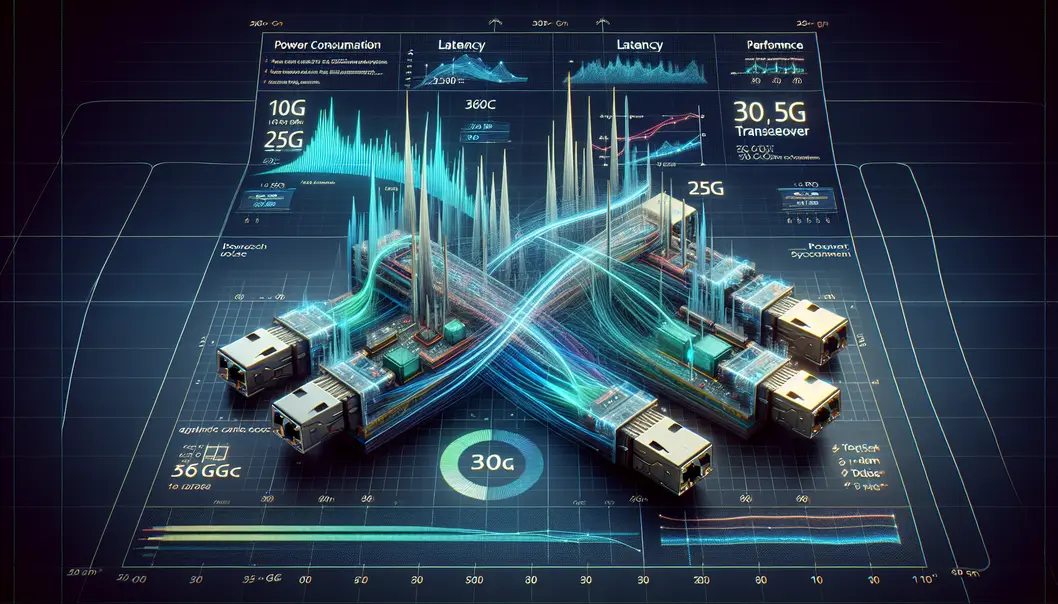
The performance gap between 10G SFP+ and 25G SFP28 is not just a simple speed increase. It changes how efficiently a data center handles east-west traffic, virtualization density, storage access, and application response under load. In many enterprise environments, 10G remains adequate for lightly utilized access layers, modest virtualization clusters, and workloads with predictable traffic patterns. But once link congestion becomes frequent, 25G often delivers benefits that are operational, not just theoretical.
A single 25G lane provides 2.5 times the bandwidth of 10G without forcing a major jump in port density models. That matters when servers run more virtual machines, containers, or high-throughput storage sessions than they did a few years ago. Instead of bonding multiple 10G links, architects can often use one 25G uplink and gain simpler management, better link utilization, and fewer consumed switch ports. This is especially valuable in top-of-rack designs, where every port affects oversubscription planning and future expansion.
Latency is also part of the decision, though it should be framed correctly. The transceiver itself is rarely the main source of delay. Congestion, serialization time, and queueing are usually more important. A 25G link reduces serialization delay compared with 10G because the same packet is transmitted faster. In low-latency environments, that helps keep microbursts from spilling into deeper queues. The result can be more consistent application behavior, especially for storage traffic, clustered databases, and dense virtualized hosts that generate short bursts across many flows.
Power adds another layer to the tradeoff. On a per-port basis, 25G optics may draw somewhat more power than 10G options, depending on media type and reach. Yet power efficiency often improves when measured per gigabit delivered. One 25G link can replace several lower-speed links, reduce the number of active lanes, and limit the need for extra switch ports. In environments where rack power and cooling are constrained, that efficiency can outweigh slightly higher module consumption.
This is why the decision should be based on traffic behavior, not only current average utilization. If server links rarely approach saturation, 10G can remain a cost-conscious and operationally sound choice. If bursty traffic, storage growth, or virtualization density already strain 10G, waiting too long creates hidden costs in oversubscription, latency spikes, and port inefficiency. For a broader speed-form-factor context, see this comparison of SFP, SFP+, SFP28, and QSFP28. Those practical pressure points are what usually push enterprises from acceptable 10G performance toward clearly justified 25G adoption.
Planning the Upgrade Path: How to Future-Proof 10G SFP+ and 25G SFP28 Choices in Enterprise Data Centers

A sound migration roadmap starts with a simple question: how long must this link design stay useful? That question often decides whether 10G SFP+ remains the practical choice or whether 25G SFP28 is the better long-term move. In enterprise data centers, the answer is rarely about raw speed alone. It is about server refresh timing, switch lifecycle, cabling reuse, and the risk of buying bandwidth twice.
If the environment will remain stable for years, 10G can still make sense. That is especially true for management networks, legacy virtualization clusters, modest storage traffic, and applications with predictable east-west demand. In these cases, extending a proven 10G design can reduce disruption. It can also preserve operational consistency when existing top-of-rack switches, optics spares, and monitoring baselines are all built around 10G. A short planning horizon favors this approach.
The logic shifts when the data center is entering a hardware refresh cycle. New servers increasingly need more than 10G per host, especially when virtualization density rises, backup windows shrink, and storage traffic shares the same fabric. Moving to 25G at the server edge gives more room for growth without forcing an immediate jump to more complex architectures. It also aligns better with modern leaf-spine designs, where uplink scaling becomes easier when access ports deliver higher bandwidth per lane. In practice, 25G is often the cleaner strategic step because it raises edge capacity while preserving a familiar operational model.
Future-proofing also depends on avoiding stranded infrastructure. If current cabling plants can support a transition, the upgrade path becomes less risky. If the network team expects eventual moves toward 100G or denser aggregation, choosing 25G now can create a more natural progression, since those architectures often build on the same per-lane logic. That does not mean every rack should be upgraded at once. A phased model is usually stronger: keep 10G where utilization is low, introduce 25G in new compute pods, and align optical inventory with the next switching cycle rather than the last one.
This is why migration planning should be tied to application growth curves, not just port costs. A cheaper 10G deployment can become more expensive if it triggers early replacement. By contrast, selective 25G adoption can delay the next redesign and simplify the path toward higher-speed fabrics discussed in this guide to data center upgrades with 100G QSFP28. The best roadmap is usually mixed, deliberate, and timed to refresh points where bandwidth demand, hardware turnover, and architectural direction finally line up.
Final thoughts
Choosing between 10G SFP+ and 25G SFP28 depends on multiple factors, including cost constraints, architecture goals, and future scaling requirements. While 10G remains a reliable solution for many legacy systems, the push for higher bandwidth with minimal oversubscription makes 25G an attractive choice for next-gen data centers. Each decision should align with your specific workload, budget, and long-term goals, ensuring that your infrastructure balances cost-effectiveness with performance scalability.
Talk to ABPTEL about high-speed optics, MTP/MPO cabling, and data center interconnect solutions.
Learn more: https://abptel.com/contact/
About us
ABPTEL provides high-speed optical transceivers, MTP/MPO cabling systems, DAC and AOC cables, PoE switches, FTTA solutions, and fiber tools for data center, AI, telecom, and network infrastructure projects.